Просмотр новости
Найдите то, что Вас интересует
 Спутники
 РН
РН SpaceX
 Роскосмос
 NASA
NASA
СпутникиРНSpaceXРоскосмосNASAUS sunscreens enter a new age with bemotrizinol
The U.S. is one step closer to selling sunscreen products similar to those you might find in cosmetics stores across Europe, Australia and parts of Asia.
More than 20 years after chemical manufacturer DSM Nutritional Products first applied for approval, the U.S. Food and Drug Administration gave the go-ahead to an active sunscreen ingredient bemotrizinol (beh-moe-TRI-zinol), sometimes called BEMT, which protects people against harmful ultraviolet radiation.
Dermatologists are enthusiastic about the ingredient’s upcoming introduction to U.S. products.
"It expands the available options for UV protection in the U.S.," said Dr. Marisa Garshick, a clinical dermatology professor at New York Presbyterian-Weill Cornell Medicine. "Having access to newer UV filters can help improve sunscreen formulations and hopefully encourage more consistent sunscreen use."
What makes bemotrizinol different?Like other active sunscreen ingredients, bemotrizinol is a UV filter that protects against both ultraviolet A and B rays.
UVB is the type of radiation most responsible for causing sunburns, but UVA radiation is also harmful and linked to sunburns, wrinkles and some skin cancers. Dermatologists recommend people use sunscreen with a "broad spectrum" label that means it protects against both UVA and UVB rays.
But there’s more that excites dermatologists and skin care product consumers: Bemotrizinol is a very photostable chemical, meaning it remains more effective in sunlight than other filters.
It doesn’t break down quickly in the sun and it can help improve the performance of other sunscreen ingredients, said Dr. Mona A. Gohara, a Yale School of Medicine dermatology professor.
"It also blends well into formulas, making sunscreens more cosmetically elegant and less likely to leave a noticeable white cast," she said.
And its longtime use elsewhere in the world has shown it has a strong safety record and low skin absorption, Gohara said.
Some sunscreen critics on social media have worried that other chemical sunscreen filters such as oxybenzone absorb into the bloodstream and interfere with hormones, but that concern hasn’t been proven in humans.
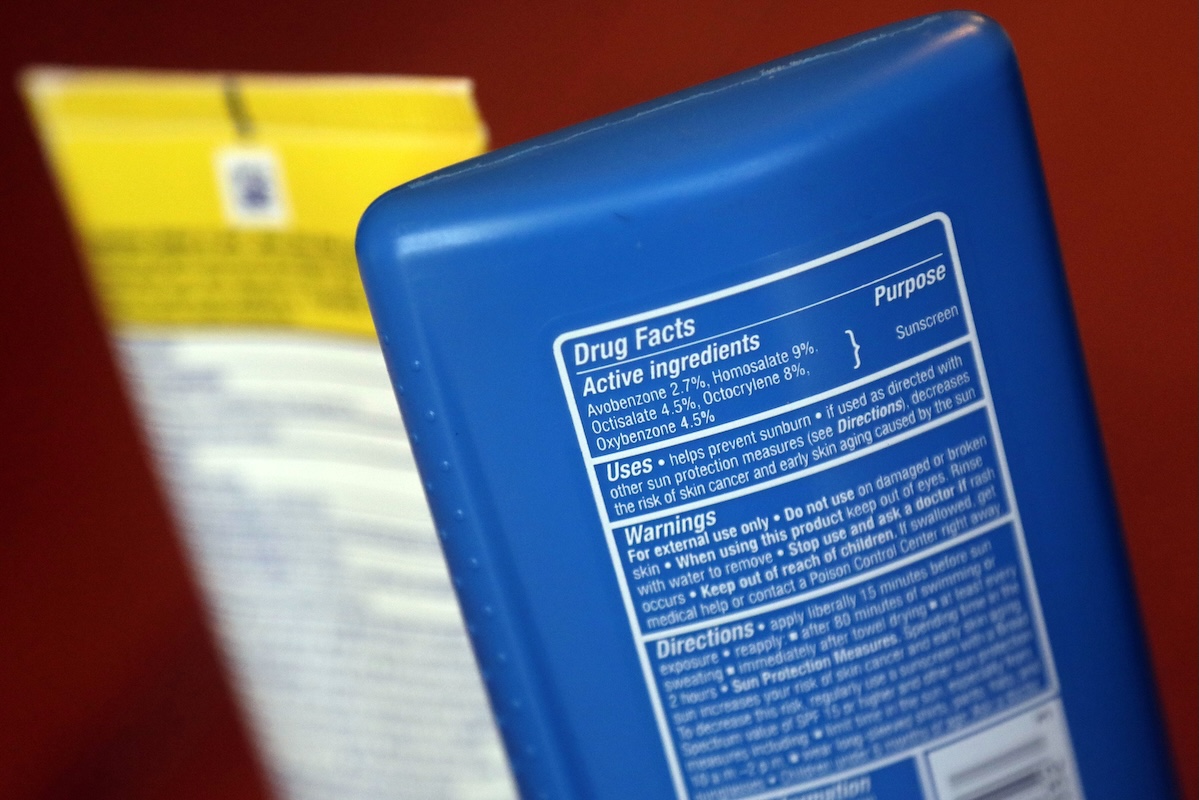
Sunscreen ingredients, including oxybenzone, are shown Wednesday, May 2, 2018, in San Jose, Calif. (AP)
What else should you know about this new ingredient?The FDA says bemotrizinol is safe for adults and children as young as 6 months old.
Similar to other skincare products, some people might experience skin irritation or sensitivity from bemotrizinol, but serious reactions are uncommon, dermatologists said.
"People with sensitive skin should still patch test new products if they have a history of reactions," Garshick said.
This new ingredient isn’t a silver-bullet, either, experts said.
"Bemotrizinol is an exciting addition, but no sunscreen ingredient is magic," Gohara said. "Consistent sunscreen use matters far more than chasing the newest ingredient."
Dermatologists recommend choosing a broad-spectrum sunscreen that’s SPF 30 or higher, applying enough and reapplying regularly — at least every two hours.
Why did U.S. approval take longer than other countries?The U.S. regulates sunscreen as an over-the-counter drug, which means new ingredients face an intense and often slow-moving FDA review and approval process. Europe, by contrast, regulates sunscreen as a cosmetic.
Although DSM Nutritional Products, now DSM-Firmenich, originally applied for bemotrizinol’s approval in 2005, the application didn’t progress for many years. In September 2024, DSM-Firmenich applied again using a faster administrative pathway created by the 2020 CARES Act. The FDA issued its final order June 10, approving bemotrizinol. It goes into effect Aug. 9, 2026.
Where can I buy sunscreen with this new ingredient?Unless you’ve got an international trip planned, you can’t get your hands on it just yet.
In December 2025, DSM-Firmenich said its product would be available soon after the FDA’s final order went into effect. It’ll be sold under the brand name Parsol Shield.
DSM-Firmenich has exclusive rights to market bemotrizinol in the U.S. for 18 months, and NPR reported that the company said the first sunscreens with this filter will be on shelves starting in September.
RELATED: Do you need SPF 30, 50 or 100? We answer your burning sunscreen questions