Просмотр новости
Найдите то, что Вас интересует
 Спутники
 РН
РН SpaceX
 Роскосмос
 NASA
NASA
СпутникиРНSpaceXРоскосмосNASAFrom Army medevac pilot to sheriff’s office rescuer, Tim Brennan answers the call when lives are on the line.
The post Answering the call: How Tim Brennan built a career saving lives from the sky appeared first on Vertical Mag.
Flash floods in Arizona can arrive with little warning, turning dry washes into torrents of muddy water in seconds. During one violent surge, a minivan carrying three elderly passengers was swept into the current and lodged against a tree midstream.
From the cockpit above, Maricopa County Sheriff’s Office pilot Tim Brennan and his crew prepared for a rescue where precision, teamwork, and calm would mean everything.
“When I first saw it from the cockpit, I thought these people drowned,” Brennan recalled on an episode of the Hangar Z Podcast. “There’s no way they’re still alive in there. That water was flowing up and over the roof. You could see the roof, but the water level was almost to the top of the windows.”
From the air, the scene was stark: fast-moving water, debris racing downstream, and a vehicle pinned against a tree with lives hanging in the balance.
Rescues like that rarely come down to a single decision in the moment. They are shaped by years of experience, built through training, judgment, and teamwork that allow a crew to stay focused when the stakes are highest.
For Brennan, that journey began far from the Arizona desert, in a small town in northern Idaho.
A moment that changed everything
Brennan’s fascination with aviation began early. As a kid, he imagined himself flying military jets, inspired by movies and stories about fighter pilots.
“Believe it or not, what really got my interest in flying was Star Wars,” he said. Watching the space battles sparked a simple realization: if starfighters weren’t real, fighter jets were the closest thing. But at 13, one experience reshaped that vision.
After joining the Civil Air Patrol cadet program, Brennan and other cadets were invited to visit Fairchild Air Force Base near Spokane, Washington. The trip included orientation flights with the base’s search-and-rescue unit, and Brennan vividly remembers the moment the helicopter started up.
“Hearing them start the engine … that classic Huey turbine line-up and the blast of smoke coming out the back, I was on cloud nine,” he recalled.
Then the aircraft lifted into the air. “And I was like, ‘Oh, that’s it. I want to fly helicopters.’”
What captivated him wasn’t just the aircraft itself, but the freedom of helicopter flight.
“I love the feeling of being able to just pick up, fly around, come to a hover, land — the maneuverability, the low-level flying you get to do,” Brennan said. “You get to see the world from a perspective nobody else does unless you fly in a helicopter.”
From that moment forward, the destination was clear: Brennan would become a helicopter pilot. The only question was how.
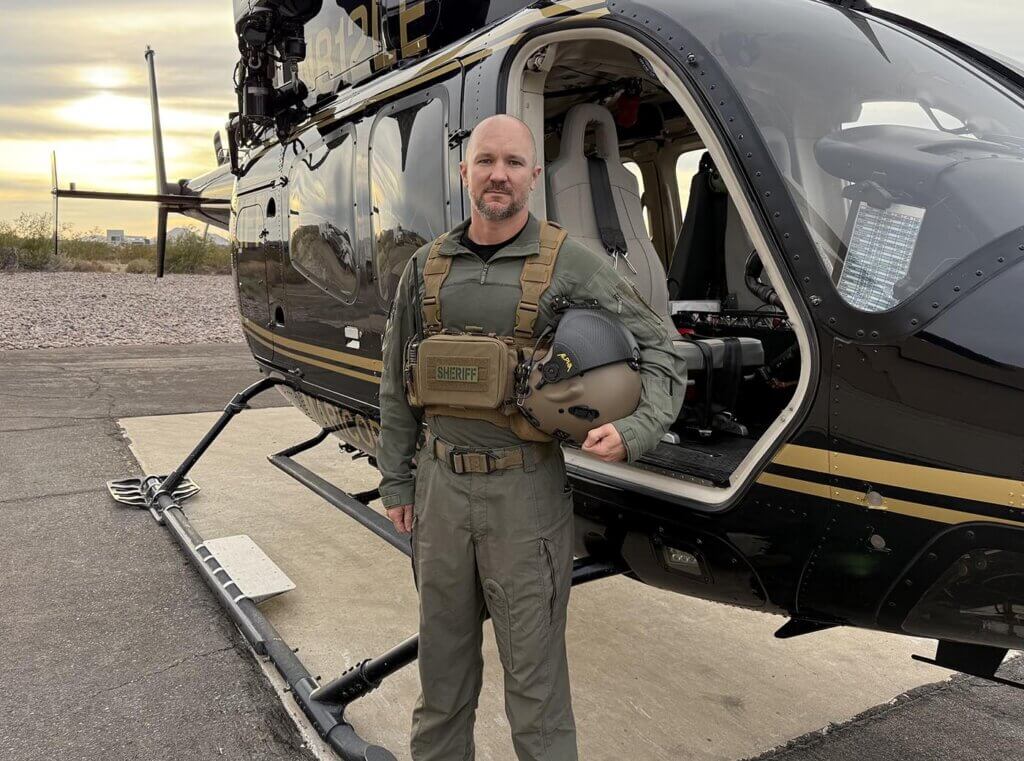 Photo courtesy of Tim Brennan
Forged in military service
Photo courtesy of Tim Brennan
Forged in military service
Brennan ultimately pursued aviation through the U.S. Army, becoming a Black Hawk pilot and medevac officer. The experience that shaped him most came during a deployment to Afghanistan.
In contrast to the slower pace of peacetime operations, the deployment brought constant flying and real consequences with every call.
“My most enjoyable time in the Army was that nine months in Afghanistan,” Brennan said. “Because we got to do the mission … the garrison life disappeared, because all of a sudden it’s real.”
There, Brennan flew frequent medical evacuations in support of troops across a vast operational area. Medevac crews were distributed across multiple bases to ensure wounded personnel could reach surgical care within the military’s critical “golden hour.”
“If we get a call within an hour, that patient better be back at the surgical team getting treatment,” he said.
For Brennan, the work carried a powerful sense of purpose. Medevac crews might not have been in the firefight itself, but they were an essential link in the chain of survival.
“You’re not in the fight, but you’re supporting the fighters,” he said. “When they need you, you’re there.”
Even amid the risks and emotional toll of wartime flying, those missions reinforced Brennan’s confidence as both a pilot and a leader.
“It felt great when you got to be part of a call and you got somebody out in time,” he said. “You hear later, ‘Yeah, he’s going to make it.’ And you’re like, yes — you got one.”
Those moments left a lasting impact. Looking back, Brennan credits the experience with shaping both his aviation career and his personal growth.
“It really was a huge part of my confidence coming back from it,” he said. “Just my development and maturity as a man. Going to a war was a huge part of that.”
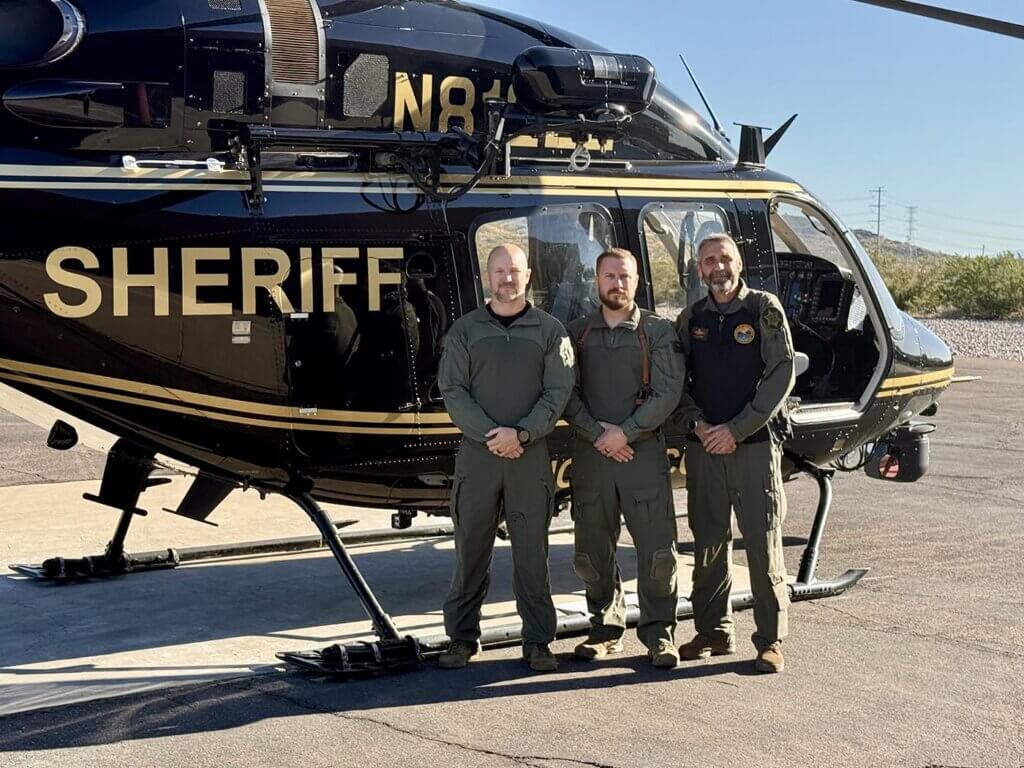 From left are pilot Tim Brennan, rescue specialist Ryan Castro, and hoist operator Rich Dickner. Photo courtesy of Tim Brennan
Building the next generation of pilots
From left are pilot Tim Brennan, rescue specialist Ryan Castro, and hoist operator Rich Dickner. Photo courtesy of Tim Brennan
Building the next generation of pilots
After leaving the Army, Brennan moved to Arizona and began the next chapter of his aviation career at Quantum Helicopters in Chandler.
At first, the goal was straightforward: earn his civilian flight instructor ratings, build experience, and transition into the civilian aviation world. But Brennan quickly became an integral part of the organization.
About a year into his time as an instructor, Quantum owner Neil Jones approached Brennan with an unexpected opportunity.
Jones was looking for a future chief instructor and believed Brennan was the right person to grow into the role — a turning point that would shape the next phase of his career.
“I was honored to be chosen by him and given that opportunity,” Brennan said.
Over the next several years, Brennan helped train hundreds of helicopter pilots. Some were brand-new students beginning their aviation journey, while others were experienced professionals, including pilots from law enforcement agencies across the region.
“I had done over 60 or 70 checkrides,” Brennan said, adding that he has also conducted more than 300 evaluation flights for students in training.
The position allowed Brennan to shape the skills and mindset of the next generation of aviators, including many who would go on to careers in public safety aviation.
Yet even while teaching others to fly, Brennan knew where he ultimately wanted his own path to lead.
“In my heart, I always knew I wanted to go into law enforcement eventually,” he said.
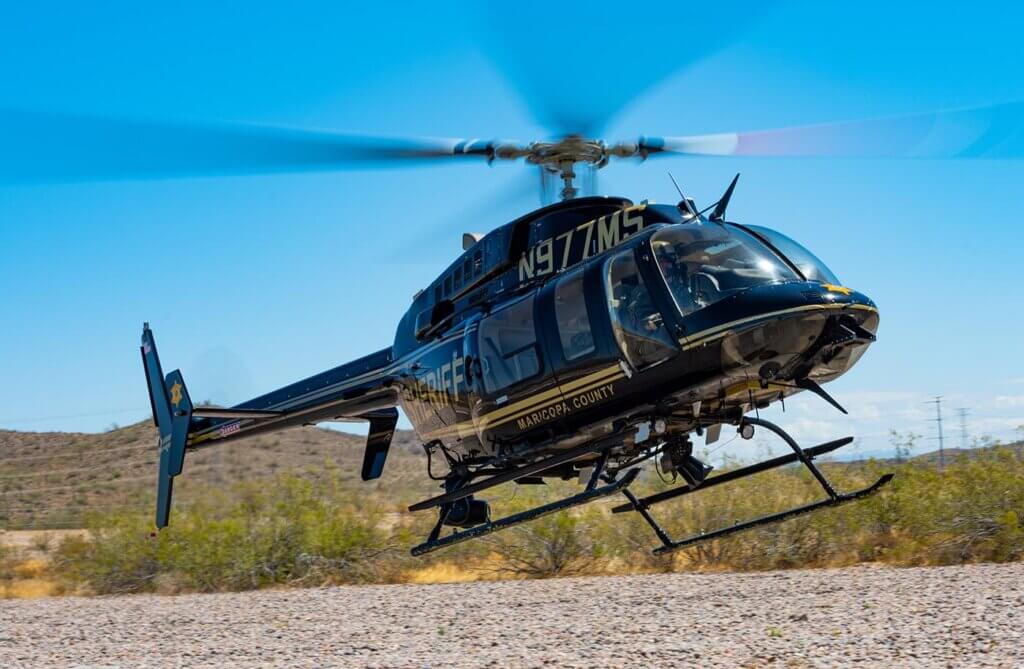 Photo courtesy of Tim Brennan
Answering the call in Maricopa County
Photo courtesy of Tim Brennan
Answering the call in Maricopa County
That opportunity finally arrived when Brennan joined the Maricopa County Sheriff’s Office Aviation Unit in Arizona.
The agency operates in one of the most demanding public safety aviation environments in the United States. Maricopa County spans thousands of square miles of desert terrain, rugged mountains, and urban and rural areas — a landscape where extreme heat, monsoon storms, and flash flooding can quickly turn routine calls into life-threatening situations.
For Brennan, the job brings together everything he has learned across his career: aviation skills, teamwork, and a mindset built around service.
Every flight carries the possibility of a rescue. And sometimes, those rescues unfold in dramatic fashion.
The flash flood rescue that swept a minivan into a desert wash and pinned it against a tree midstream was one of Brennan’s most challenging.
“They see the wall of water coming and it just sweeps them off the road and down into the wash,” Brennan said.
From the cockpit, the danger was immediately clear.
Flood rescues are among the most demanding missions public safety crews face. Swift-moving currents, floating debris, and unstable vehicles create an environment where every movement must be carefully coordinated between pilot, crew, and rescuers on the ground.
The unit conducts hoist rescue training every two weeks, and Brennan had only recently completed his qualification as a pilot in swiftwater operations before that mission.
For Brennan and his crew, the rescue demanded calm communication and precise aircraft positioning to support the hoist below. Moments like that are where experience matters most.
Years of military medevac missions, hundreds of instructional flights, and thousands of hours in the cockpit come together in the discipline required to hold a steady hover over fast-moving water while a rescue unfolds beneath the aircraft.
It is also a reminder that public safety aviation is never a solo endeavor. Rescues like this are never the work of one person.
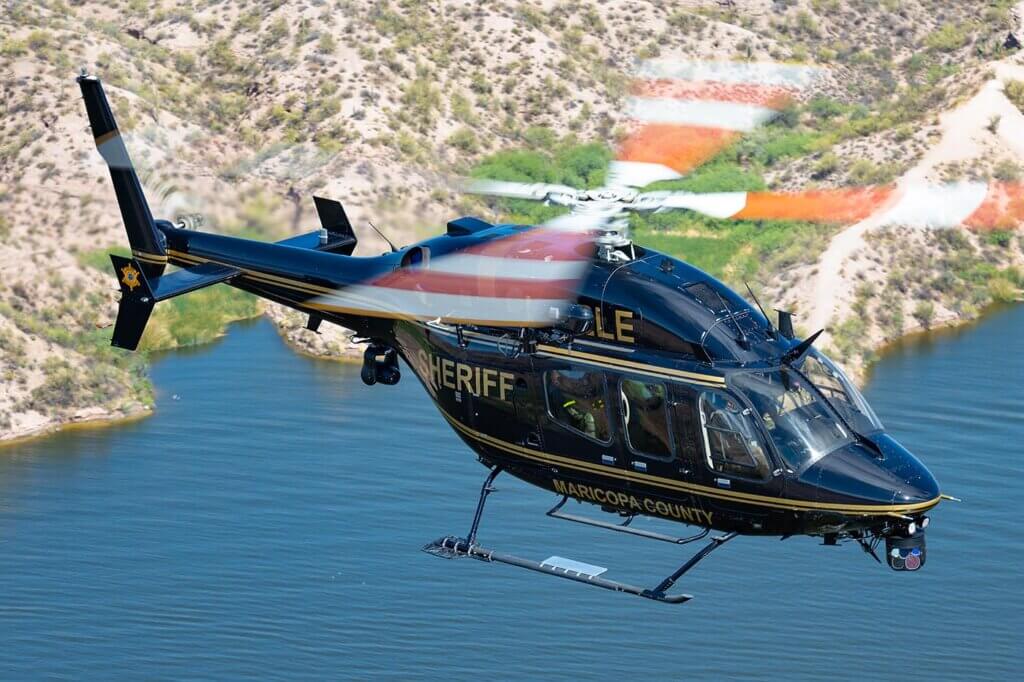 Dan Megna Photo
A career built on service
Dan Megna Photo
A career built on service
Throughout his career, Brennan has consistently gravitated toward roles centered on helping others — whether evacuating wounded soldiers, training the next generation of pilots, or flying rescue missions across Arizona.
For him, that sense of purpose is the common thread connecting each chapter of his journey.
“Even with all the horrible things we saw and experienced,” he said of his deployment, “it was the most satisfying, enjoyable time I had in my Army career because of what we got to do.”
Today, that same sense of mission continues in the skies over Maricopa County.
Every flight carries the possibility of helping someone in need — sometimes in dramatic fashion, like the flood rescue Brennan described. But just as often, the work involves quieter moments of service that rarely make headlines.
The lessons that began with a teenager’s first helicopter ride still guide Brennan today. For him, aviation has always been about more than flying. It’s about answering the call.
The 2026 Blades of Valor Recognition Program is sponsored by Switlik Survival Products.
| # | Наименование новости | Тональность | Информативность | Дата публикации |
|---|---|---|---|---|
| 1 | Virginia State Police Aviation Division is a lifeline from above | 0 | 5.43 | 29-07-2026 |
| 2 | Sikorsky Black Hawk: Born for battle, built for fire | 0 | 6.75 | 06-07-2026 |
| 3 | How volunteer search-and-rescue teams around the world are looking to the future | 0 | 9.7 | 22-06-2026 |
| 4 | Pilots Who Ask Why? 56 seconds to live | 0 | 11.24 | 08-06-2026 |
| 5 | Modern wildfire response depends on layered aerial firefighting | 0 | 7.44 | 13-07-2026 |
| 6 | Night vision: Welcome to the dark side of aerial firefighting | 0 | 7.5 | 09-07-2026 |
| 7 | Smarter suppression: How helicopter tech aids the fight against wildfires | 0 | 9.18 | 07-07-2026 |
| 8 | Inside Florida’s effort to bring public safety aviation together before disaster strikes | 0 | 6.03 | 17-06-2026 |
| 9 | How longer fire seasons are reshaping helicopter maintenance | 0 | 7.92 | 01-07-2026 |
| 10 | Coast Guard Air Station Borinquen: On Maritime watch | 0 | 6.28 | 01-06-2026 |