Просмотр новости
Найдите то, что Вас интересует
 Спутники
 РН
РН SpaceX
 Роскосмос
 NASA
NASA
СпутникиРНSpaceXРоскосмосNASAWhile discussions about Ukraine often focus on security and defence concerns, the country’s resilience and recovery ultimately depend on the opportunities people have economically, educationally, and socially. This was a key message of the Eastern Partnership Civil Society Forum (EaP CSF) event held in Brussels on 2 June, where European Union policymakers, civil society representatives, [...]
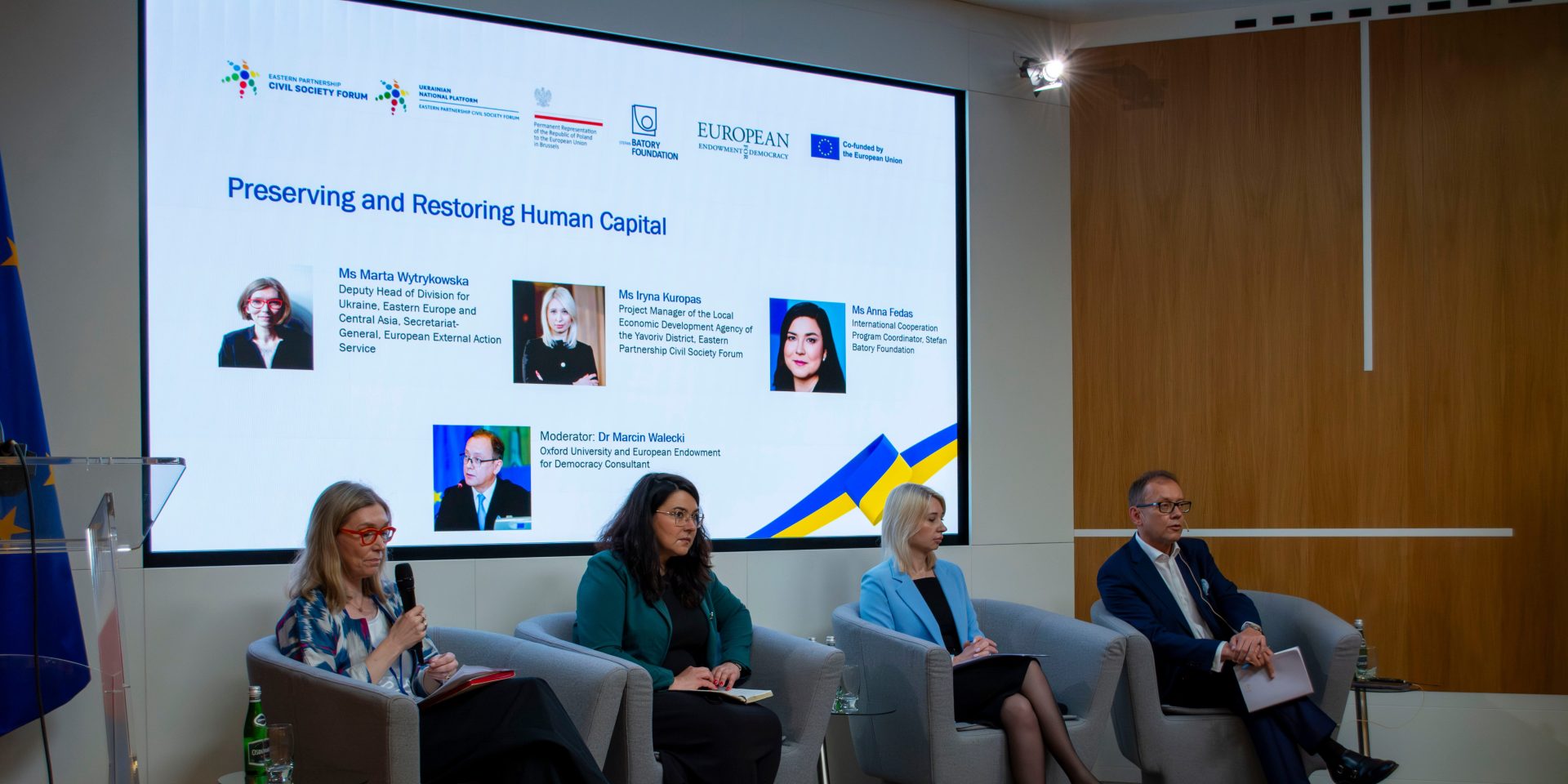
While discussions about Ukraine often focus on security and defence concerns, the country’s resilience and recovery ultimately depend on the opportunities people have economically, educationally, and socially. This was a key message of the Eastern Partnership Civil Society Forum (EaP CSF) event held in Brussels on 2 June, where European Union policymakers, civil society representatives, and Ukrainian stakeholders gathered to discuss the role of human capital and civil society organisations in Ukraine’s recovery and future development ahead of the Ukraine Recovery Conference (URC) in Gdańsk in June 2026.
Furthermore, amidst ongoing discussions on Ukraine’s integration into the European Union, the role of human capital–and by extension, the role of civil society organisations–is a critical area of focus. Because they are embedded within communities, civil society organisations are uniquely positioned to surface the distinct needs of different groups to advocate for differentiated, responsive policy, according to Iryna Kuropas, a project manager for the Local Economic Development Agency of the Yavoriv District (Ukraine).
Local civil society organisations in Ukraine play a significant role in creating conditions for Ukrainians to be resilient during the ongoing invasion of Russia, and for Ukrainians abroad to come back to a country and contribute to its recovery, stability and ultimate accession to the EU, as stated by Marta Wytrykowska from the European External Action Service. Indeed, supporting civil society organisations in Ukraine that contribute to, among others, creating and supporting economic opportunities, veteran support, and psychological support is pivotal for the resilience and recovery of Ukraine. In this way, civil society organisations are more than mere tools of implementing reforms or legislation imposed by the EU or government; they are key partners in identifying needs-based solutions for those affected by the war, as noted by Marcin Walecki from the European Endowment for Democracy.
Especially those most impacted by the war must have a seat at this table: veterans, internally displaced persons, individuals living in occupied places, and, importantly, children. Indeed, Walecki noted how “the quality of education has dropped dramatically” as children spend significant amounts of time in shelters, leading to immense disruption in both access to and quality of education. Moreover, having already suffered the interrupted education of the COVID-19 years, Ukrainian children are receiving “sub-standard education”, revealing the need to discuss setting up programs to “help them catch up”.
Social cohesion in Ukraine, both now and in a post-war context, is highly dependent on the range of experiences considered in these discussions, and the representative ability of civil society organisations has a clear purpose here. Ultimately, representation matters for the needs-based interventions and for resilience against societal cohesion destabilisation that may emerge in a post-war context, according to Wytrykowska. This is equally true in education, where civil society organisations play an important role in ensuring that the experiences and needs of diverse groups, including displaced children, young people living near the front line, veterans’ families, and communities affected by occupation, are reflected in educational policies and recovery efforts.
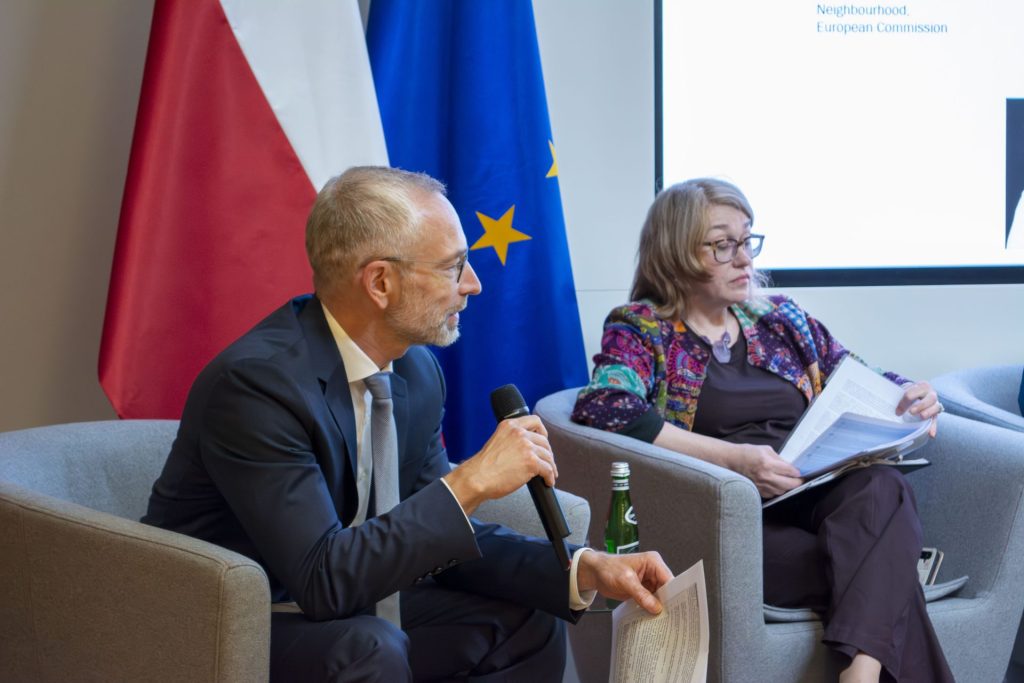
Mr Wolfgang Nozar, European Commission Photo by EaP CSF
Ms Marta Wytrykowska, European External Action Service; Ms Iryna Kuropas, Project Manager, Local Economic Development Agency of the Yavoriv District; Ms Anna Fedas, Stefan Batory Foundation Photo by EaP CSF
About the Author: Hannah Kamp