Просмотр новости
Найдите то, что Вас интересует
 Спутники
 РН
РН SpaceX
 Роскосмос
 NASA
NASA
СпутникиРНSpaceXРоскосмосNASAAdvocates for the ‘20 is Plenty’ movement say it's a proven way to reduce serious injuries from crashes. But public buy-in and a complicated state system could be barriers.
 A speed tracker on High Street in Portland on Wednesday. City staff are discussing the possibility of lowering some speed limits from 25 mph to 20 mph as part of a push to reduce the severity and frequency of crashes involving pedestrians. (Brianna Soukup/Staff Photographer)
After Amy Cohen’s 12-year-old son was killed by a New York City driver in 2013, she and others who had lost family members in crashes began lobbying for change.
Their first fight was to get New York City to lower its base speed limit from 30 mph to 20 mph. A few months later, lawmakers settled on a 25 mph compromise. Within a year, traffic deaths fell by more than 22%.
Two years ago, a law named after Cohen’s son allowed New York to lower speed limits to 20 mph, and now her organization, Families for Safe Streets, is leading the charge for it to be implemented.
It’s also inspired other cities looking for answers to a nationwide uptick in traffic-related injuries and deaths.
Portland officials recently got their first taste of a proposal to reduce speed limits on most city streets to 20 mph. Advocates say “20 is Plenty” has been proven to be a cost-effective way to slow down traffic and reduce injuries and deaths. But public buy-in and a complicated state transportation system could ultimately be barriers.
The proposal comes as the city grapples with an increase in crashes involving pedestrians. While officials have backed a long-term Vision Zero effort to eliminate pedestrian deaths, advocates have pressed the city to do more in the short term to address unsafe road conditions.
Among other initiatives, Portland police announced Friday that they will begin an enhanced traffic enforcement operation next week.
Myles Smith, chair of the city’s bicycle and pedestrian advisory committee, is among those who believes “20 is Plenty” could work for Portland. The most simple reason for the change, he said, is dropping vehicle speeds to a speed that would most likely be survivable by a person who’s hit.
According to the National Traffic Safety Board, if a car hits a pedestrian at 40 mph, there’s an 85% chance the crash will result in a fatality. At 30 mph, it’s 45%. At 20 mph, it’s just 5%.
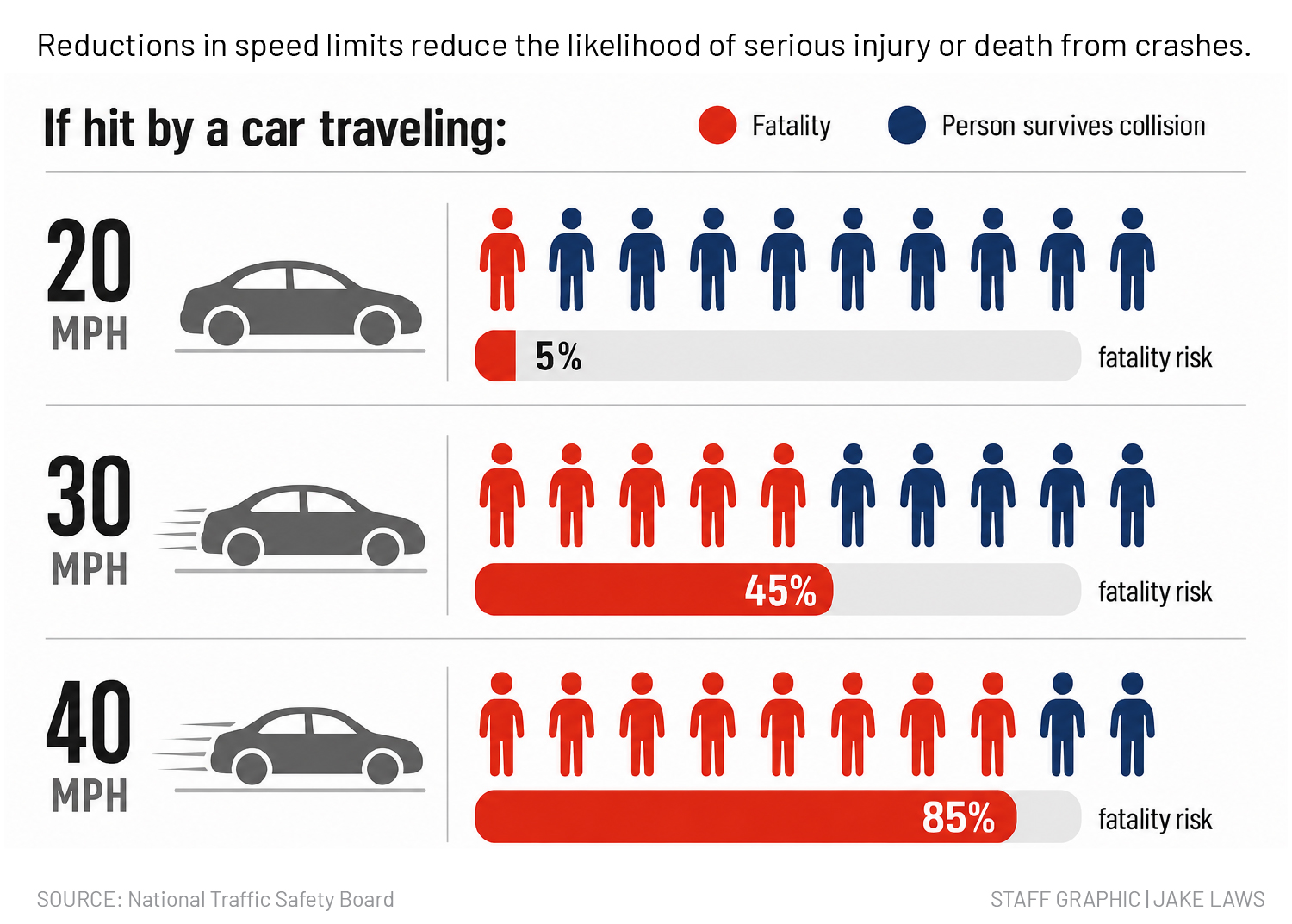
Smith said data from other cities that have implemented 20 mph limits has consistently shown a 15%-20% drop in crashes resulting in injury, and that on most roads, you only need a small number of cars to comply to slow down all traffic.
“It’s not the goal to get people rung up for tickets,” he said.
The initial reaction from city councilors has been a mix of positive but wary.
Mayor Mark Dion said he still has questions about the legal process for changing speed limits, its potential impact on police traffic enforcement, and whether motorists will actually comply.
He said when he pictures someone driving 20 mph, he thinks about motorists driving erratically behind them, trying to pass. But he’s hopeful that a debate can at least begin a public dialogue over driving habits.
“Are we willing to adopt a new norm about how we drive in the city?” he said. “If ’20 is Plenty’ starts us down that path, I think that’s a good thing.”
THE PROCESSGreg Jordan, an assistant city manager who oversees Portland’s Vision Zero effort, said staff will be back in front of the Sustainability and Transportation Committee on Sept. 9 to outline the process for changing local speed limits, and the committee may take action that night.
Changing speed limits on municipally controlled residential streets is fairly straightforward. The city must confirm which roads qualify, conduct a traffic investigation, adopt the changes through ordinance, install signs, and notify the Maine Department of Transportation.
In these cases, most streets that are now 25 mph would be lowered to 20 mph. (The city only has a few streets with limits of 20 or 15 mph.)
However, pursuing changes to state roads appears much more complicated. Jordan said for arterials like Forest Avenue and Brighton Avenue — home to many of the city’s high-crash locations — the city would have to request speed studies from MDOT to determine if a speed limit change is warranted, provide the supporting data, and work through the state’s review process.
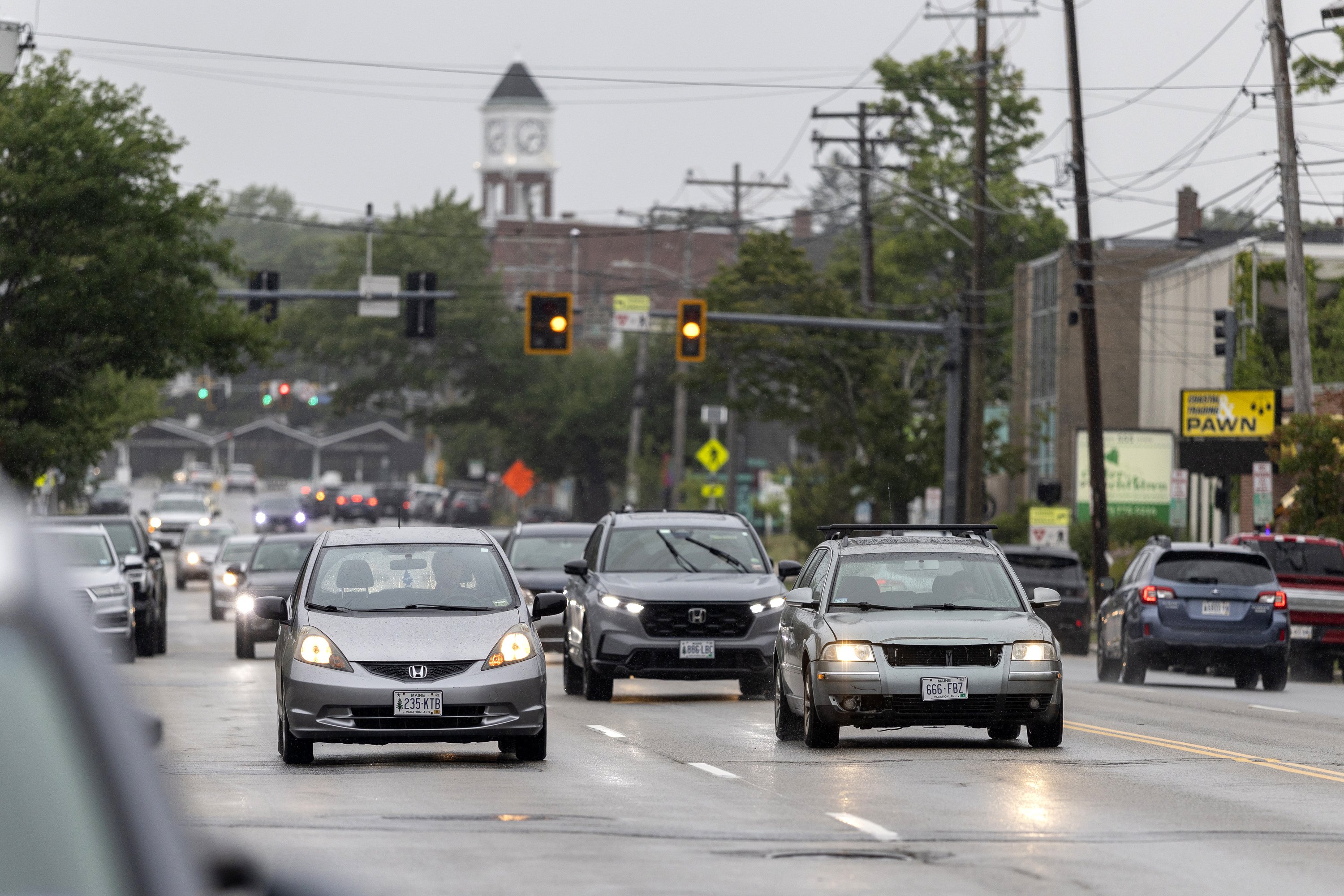 Traffic on Forest Avenue in Portland on Wednesday. Changing speed limits on state-owned roads like Forest Avenue is much more complicated than lowering speeds on locally controlled streets. (Brianna Soukup/Staff Photographer)
That can take a long time. A MDOT traffic engineer told Smith in January that speed study requests usually take a year or more to get to the top of the packed queue.
The most recent study to be completed in Portland was for a small section of Presumpscot Street, which was lowered to 25 mph from 30 mph. It took about a year.
Smith believes Portland can simply request that limits be changed, and MDOT can decide whether to grant the request, pointing to other states that have done the same.
“It would take until the end of the millennium to do a speed study on every street and change it by their current process,” he said. “This is a program that has worked, our current process is too long to get to Vision Zero, and this is something we can do now.”
Jordan said city staff will meet with MDOT staff in August to “clarify the legal and regulatory elements” of the process.
Andrew Gobeil, director of communications for MDOT, confirmed the process this week and said based on the data gathered during a speed study, it’s also possible that the department could recommend raising the speed limit.
THE DATAOn Munjoy Hill, neighbors have been rallying around pedestrian safety efforts following a stretch of fatal crashes.
Michael Dixon, president of the Munjoy Hill Neighborhood Organization, said efforts include smaller fixes, such as traffic-calming installations but also support for broader strategies like “20 is Plenty.” In June, Dixon was on hand when the city announced a public awareness campaign on pedestrian safety in Lincoln Park.
Dixon said he expects larger changes to take time and meet some resistance but believes they are the right thing to do.
“After far too many car crashes that have severely injured or killed people in our streets, Portland needs urgent, effective action now: 20 is absolutely plenty,” he said.
Smith and the advisory committee have been gathering data from other cities that have made the switch to 20 mph. Some, like Cambridge, Massachusetts, have gone to 20 mph on most residential streets, while the limits on other major roads were lowered to 25 mph.
Patricia Nolan, a city councilor in Cambridge, was on the School Committee when the city first proposed the change. She said there was some concern among residents at first, but that it was viewed positively by parents.
In her mind, the shift has been successful.
“Residents generally appreciate it, and our Vision Zero plan has led to greater safety,” Nolan said, adding that while speeding still occurs, data has shown a drop in average speeds.
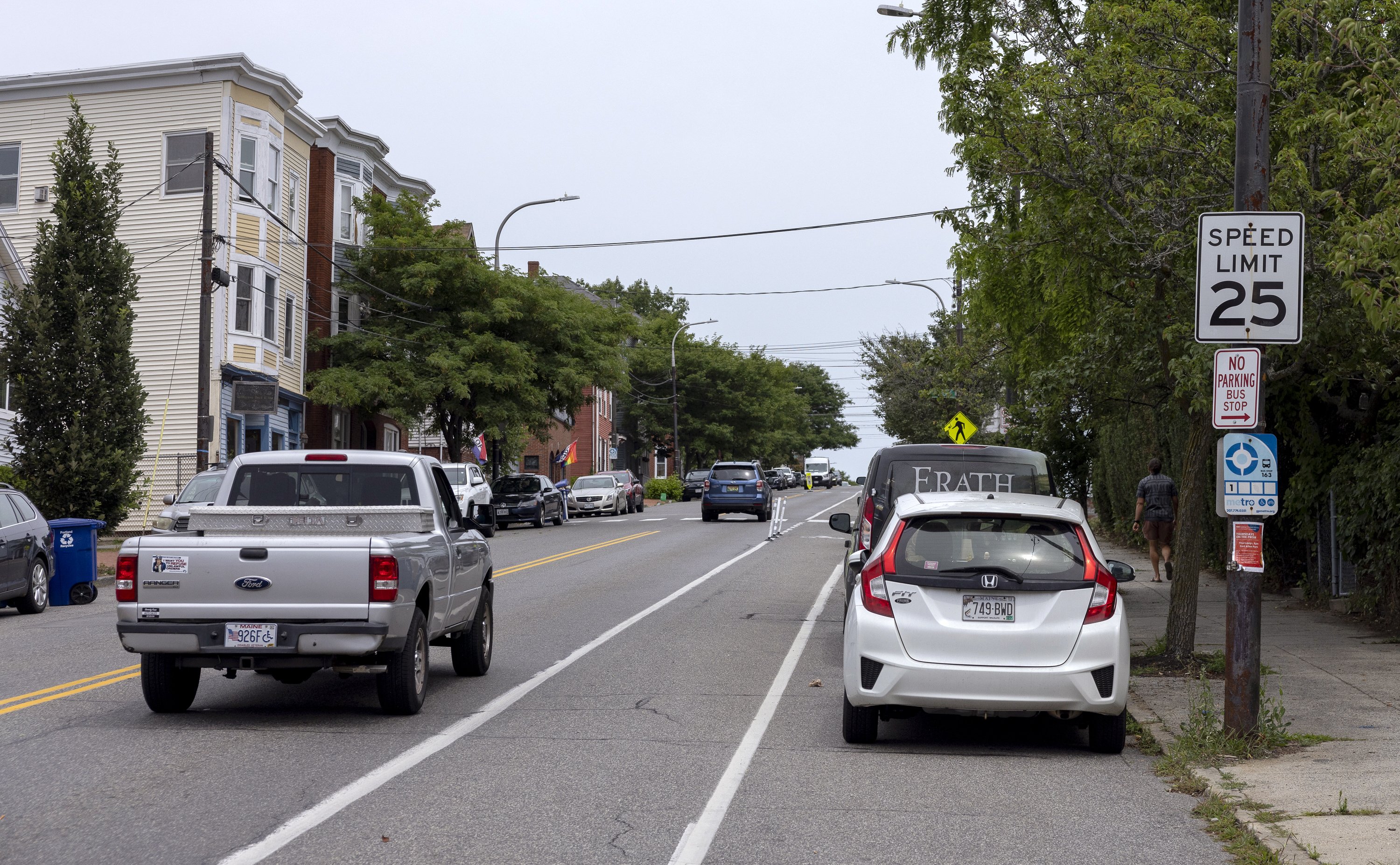 A speed limit sign on Congress Street in Portland’s East End on Wednesday. (Brianna Soukup/Staff Photographer)
Seattle lowered speed limits to 25 mph on all downtown streets in 2016, and in 2019 began a process to lower speeds on busier arterials following a bad year for serious crashes. Portland, Oregon, made the change to 20 mph on residential streets in 2019, and a year later a study showed a reduction in speeds at most locations analyzed.
It’s working overseas, too. Cohen, from Families For Safe Streets, said a long-term study in London found a 40% reduction in deaths on residential streets, plus a 7% decline on other roads that didn’t have speed limits reduced, signaling that driver behavior was changing more broadly. In Wales, deaths dropped 25% within 18 months of shifting most roads to 20 mph, and that was with limited traffic enforcement.
Portland Councilor Pious Ali said he supports “any action or policy adjustments” that can reduce speeds, calling the recent crashes “heartbreaking.”
But, he said, any citywide change should be “guided by data, community input, engagement with our state partners, and the expertise of our transportation professionals so we can understand where it will have the greatest impact and how it can be implemented effectively.”
Councilor Anna Bullett had a similar take. She said lowering speed limits to 20 mph on residential side streets with limited or no sidewalks is “common sense.” However, MDOT is a critical partner to the city, she said, and she’s “not interested in attempting to push through a policy or ordinance without their traffic engineers at the table.”
What if reduced speed limits make a daily commute in an already congested Greater Portland take even longer? Advisory committee member Liz Trice said slowing speeds increases travel times on the average in-city trip only by a few minutes.
Smith added that data shows that most people who speed recklessly don’t do it in their own neighborhood.
So, the commuters getting around the city?
“I don’t think it should be policy priority to make sure they make it to work two minutes faster,” he said.
| # | Наименование новости | Тональность | Информативность | Дата публикации |
|---|---|---|---|---|
| 1 | City-owned garages are the new Portland parking hack | Column | 0 | 38 | 31-07-2026 |
| 2 | Assault case against Portland city official dropped | 0 | 30.63 | 30-07-2026 |
| 3 | Scarborough parking changes have residents, businesses at odds | 0 | 37.35 | 30-07-2026 |
| 4 | Portland overwhelmingly approves $179.3M school budget | 5 | 7 | 10-06-2026 |
| 5 | Portland hires 2 new assistant superintendents | 0 | 5 | 25-06-2026 |
| 6 | Locals split as Cambridge 20mph limit could be ‘waste of time’ or change driving habits | 0 | 5 | 20-07-2026 |
| 7 | In Aroostook County, Senate contest of locals doubles as test of Trump’s base | 0 | 35.91 | 02-08-2026 |
| 8 | No Speeding Tickets: Highways In Montana Had No Speed Limit | 0 | 5 | 29-04-2026 |
| 9 | 20mph speed limit consultation divides as some say 'speed bumps are required' | 0 | 9.84 | 26-07-2026 |
| 10 | 5 things to know about the Mountain Division Trail | 0 | 42.85 | 22-07-2026 |