Просмотр новости
Найдите то, что Вас интересует
 Спутники
 РН
РН SpaceX
 Роскосмос
 NASA
NASA
СпутникиРНSpaceXРоскосмосNASAEarthworm populations globally are in decline, along with their vital ability to act as ecosystem engineers
Working in the garden recently, I was joined by a young robin foraging for food. Watching the urgency of its efforts, it suddenly hit me with a pang that I hadn’t seen an earthworm in what felt like months. With my efforts focused on keeping young plants and seedlings alive during this summer’s heatwaves, I somehow hadn’t noticed their absence. And yet without them, there would be no garden, no plants, no soil.
They are often described as ecosystem engineers because of the prodigious work they do to sustain soil fertility, soil structure and nutrient cycling, and Ireland is home to 28 different species of these fascinating creatures, which have traditionally been divided into three distinct ecological groups.
The first and the most abundant are what’s known as endogeic earthworms. Commonly found in topsoil, where they make horizontal burrows, these play an important role in supporting healthy soil structure through what’s known as soil aggregation, or the binding of individual soil particles into soil crumbs. If that sounds unimportant, then it’s worth reminding ourselves that a crumbly soil is exactly what most plants – and thus most gardeners – love.
The second group, comprised of epi-endogeic and epigeic species, live on or close to the surface of the soil in leaf litter, where they play a valuable role in stimulating beneficial soil microbes, cycling carbon and breaking down organic matter. But despite the common belief that all earthworms burrow into the ground, epi-endogeic species only rarely burrow, while epigeic species never do. Often bright red in colour, these are the great recyclers, and the worms you’ll find hard at work in your compost or manure heap.
Last but not least are what are typically classed as anecic earthworms, the large, soil-dwelling, deep burrowers that can vertically tunnel down as much as two metres. Typically brown in colour, these feed on soil and decaying plant material that they drag deep into their burrows. The entrances to those burrows are somewhat quaintly known as middens, which you’ll often see surrounded by humus-rich worm casts (their poo), yet another vital ingredient in healthy soil. The common earthworm, Lumbricis terrestris, which most gardeners have encountered when digging a deep planting hole, belongs to this group and is known for its longevity as well as its size, sometimes reaching up to 40cm in length and living for as long as eight years.
Ongoing research into earthworm activity has resulted in scientists recently suggesting that these three broad ecological categories should be revised and extended to a total of six to reflect the complexity of earthworms’ “bioturbation” behaviour, meaning the different ways in which they recycle and redistribute waste material. But that’s a conversation for another day.
Far more important than whatever ecological group they belong to, or whatever bioturbation group they’ll eventually belong to, is the fact that earthworms breathe through their skin and are highly sensitive to changes of moisture levels in the soil, both in terms of excessive dryness and excessive wet.
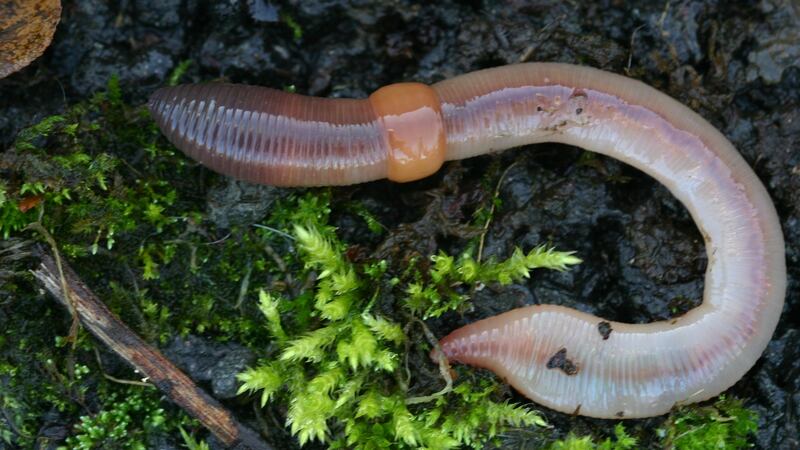
In hot, dry summers like this one, some species can burrow deeply into the ground, where they create tiny, enclosed chambers that they line and seal with mucus to conserve humidity. They then coil themselves up into a protective ball to conserve body moisture before entering a state of hibernation, or what’s called “aestivation”, until soil conditions improve, typically in autumn.
But while this mechanism helps some earthworms to survive both drought and flooding, it comes at a cost in terms of their overall health and ability to reproduce, especially if it’s for prolonged or repeated periods. The process of aestivation also comes at a cost to soil health, as both soil structure and fertility depend upon the regular activity or bioturbation of earthworms. Another cost is the effect on soil micro-organisms, most of which also rely on earthworm activity, such as beneficial bacteria and fungi.
Populations of other more surface-dwelling species of earthworms, which typically don’t aestivate, are even more vulnerable to drought and can quickly dwindle in numbers during a sustained heatwave. Instead, these species survive drought via the hardy egg cocoons they leave behind, which hatch once conditions improve.
Worryingly, recent studies show that a combination of changes in land use, modern methods of agriculture, soil compaction, the introduction of invasive predators such as the New Zealand flatworm, and most of all climate change, is affecting earthworm populations globally, reducing both their overall numbers and the diversity of species as well as their all-important ability to act as ecosystem engineers. Research by the British Trust for Ornithology put the rate of their decline at 33–41 per cent in the past 25 years, with the decline most obvious in woodland and grassland.
This is all bad news for our gardens and the plants that grow in them. It’s also bad news for the wild animals and insects that depend on earthworms as an important food source. That list includes many kinds of garden birds such as blackbirds, thrushes and robins, as well as badgers, foxes, hedgehogs, shrews, mice and ground beetles.
Gardeners can do our bit to mitigate the worst of this decline by using dense, multilayered, species-rich planting to act as a parasol for the soil, protecting it from intense heat and slowing the rate of water loss during droughts. Protecting the surface of the soil with organic mulches such as home-made garden compost, well-rotted manure, leaf mould or foraged seaweed also helps to protect earthworms by providing food, conserving soil moisture and sheltering the ground surface from hot sunshine.
Finally, avoiding the use of insecticides, fungicides and artificial fertilisers and minimise the use of slug pellets to protect vulnerable earthworm populations, and adapt a little-dig or no-dig approach that protects their habitats and allows their complex network of underground burrows to remain intact.
This week in the gardenGuided history tour of RHSI Bellefield House and Gardens: Birr, Co Offaly; August 20th, 2pm-5pm. Admission €25 includes light refreshments, pre-booking essential. rhsi.ie
‘Summer Talks’ series at June Blake’s Garden: Tinode, Blessington, Co Wicklow. Every Sunday afternoon (from 2pm) throughout August, with a guided tour by owner June Blake and home-baked cakes available in the garden’s coffee shop. juneblake.ie
| # | Наименование новости | Тональность | Информативность | Дата публикации |
|---|---|---|---|---|
| 1 | Get a wiggle on to save the British earthworm! Experts plead for decisive action to save the essential creatures | 0 | 8.77 | 29-05-2024 |
| 2 | Brian Minter: This time of year your garden soil needs some help. Here's how | 0 | 8.56 | 19-09-2026 |
| 3 | Tipps von Naturschützern: Glühwürmchen fliegen wieder – so lockt man sie in den Garten | 2 | 6 | 24-06-2026 |
| 4 | Worm Munch Matters | 0 | 9.22 | 18-08-2026 |
| 5 | People aren’t the only ones hit by heat. What to do if you see wildlife affected by hot temperatures | 0 | 6 | 27-06-2026 |
| 6 | People aren’t the only ones hit by heat. What to do if you see wildlife affected by hot temperatures | 0 | 7 | 27-06-2026 |
| 7 | Slugs will leave your garden plants alone with 21p kitchen staple | 0 | 5 | 19-07-2026 |
| 8 | Green tips: Making a fairy garden planter | 5 | 6 | 16-07-2026 |
| 9 | Halting the march of the African armyworm: a natural cure offers hope to farmers | 0 | 6.76 | 12-08-2026 |
| 10 | Africa: Can a Newly Discovered Soil Fungus Stop the Devastating African Armyworm When Chemicals Have Failed? | 0 | 7.4 | 28-07-2026 |