Вход на сайт

Просмотр новости

Найдите то, что Вас интересует

Теория Рекламы :: RE: Общая Теория Рекламы: «Дураки» и «Дороги».

Дата публикации: 22-08-2026 20:31:36

Автор: Dimitriy
Добавлено: 22.08.2026 23:31 (GMT 3)


«Дураки» и «Дороги»: «

».
Цитата:
Цитата:
21.08.2026
EXPLAINED: Why German Army Is Using Kebab Shops To Find Soldiers
Источник видео.
Цитата:
Germany’s military has a new recruiting tool: Kebab wrappers
The recruitment campaign comes as Berlin seeks roughly 73,000 additional active troops over the next decade.
German kebab shops want you for the country’s army: German citizens can now join the Bundeswehr’s medical service by scanning QR codes on street-food wrappers nationwide.
A defense ministry spokesperson told German outlet Berliner Kurier on Wednesday that the new recruitment campaign aims to reach “not only young people” deciding on a career but also “career changers and skilled workers” considering a new profession.
The kebab wrappers form part of what the ministry calls “ambient” advertising — recruitment materials placed in locations where potential applicants go about their daily lives. The kebab joints themselves don’t get paid, and operators voluntarily agree to distribute the material, according to the ministry.
“The restaurants receive the branded packaging free of charge,” it said.
Germany isn’t the first European country to rethink its military recruitment pitch in recent years: In a 2019 advertising campaign, the British Army targeted “snowflakes,” “selfie addicts” and “phone zombies.” France launched a nationwide multimedia recruitment drive in 2024, and the Netherlands has been offering young people the chance to spend a paid year in uniform since 2023.
The unconventional recruitment strategy comes as Berlin races to expand its armed forces. The Bundeswehr counted 186,705 active troops at the end of July — its highest level in 13 years — but aims to reach more than 260,000 by 2035 to meet NATO capability targets.
Материал полностью.
Цитата:
German army turns Berlin doner shops into recruitment stations.

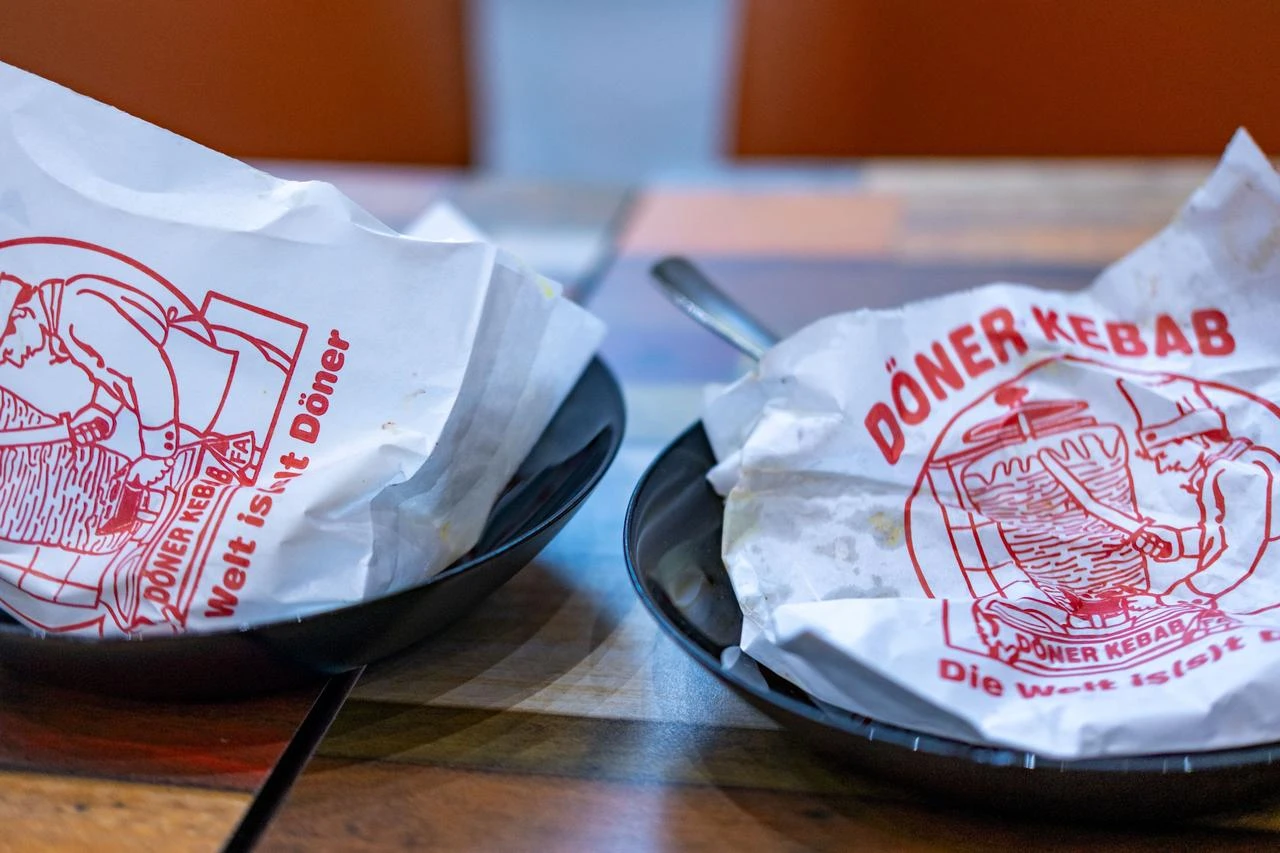
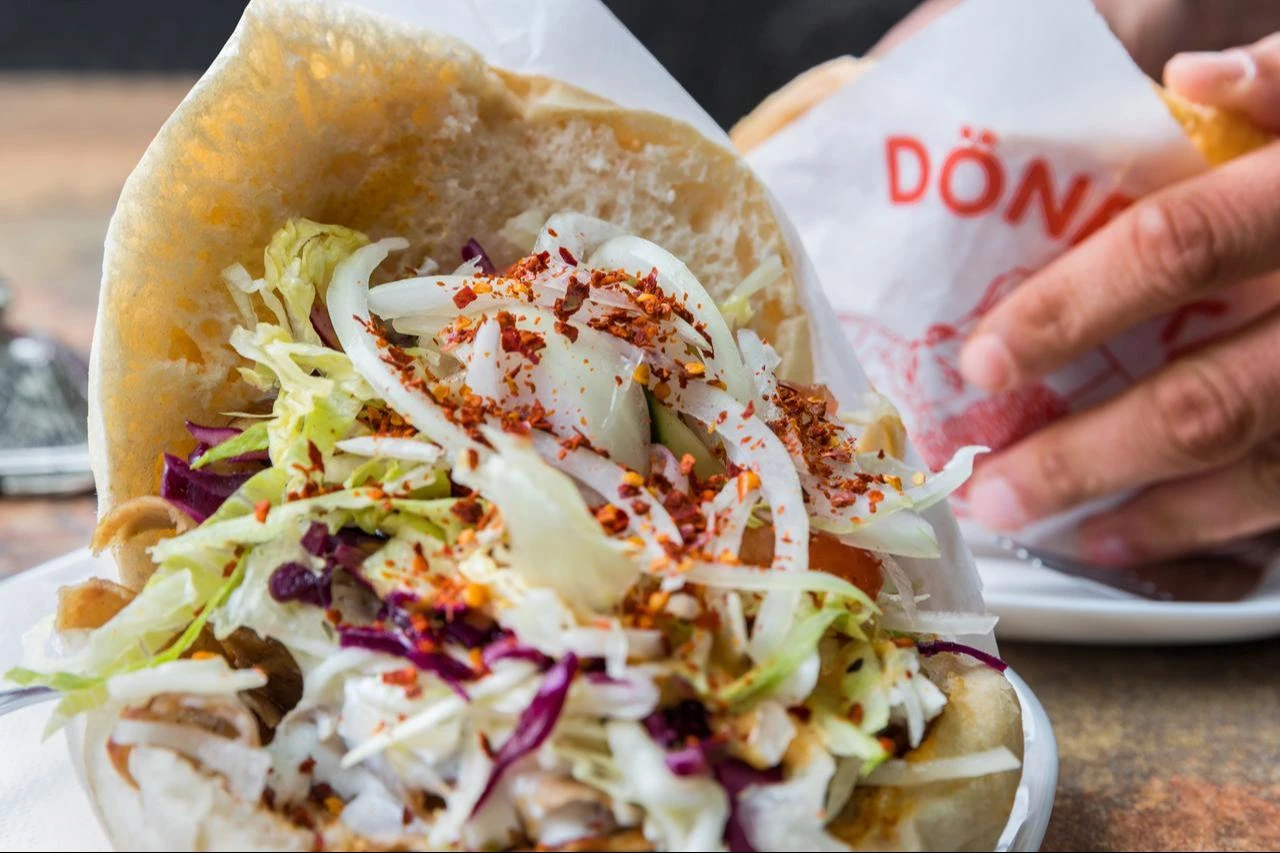
Photo shows a Doner Kebab wrapped in branded paper, served on a black plate atop a table in Hannover, Germany, February 17, 2026. (Adobe Stock Photo)
Germany's armed forces, the Bundeswehr, have begun advertising for recruits on doner kebab wrapping paper distributed at Berlin food stands, the latest recruitment tactic as the military works to expand its ranks amid what officials describe as a growing threat from Russia.
Customers picking up a doner kebab in Berlin's Lichtenberg district and elsewhere are now finding a career pitch tucked between the meat, garlic sauce and red cabbage.
The wrapping paper comes in camouflage colors bearing the slogan "Einmal Karriere mit alles", "One career with everything," a play on a common doner order, according to the Berliner Kurier.
The paper carries a QR code linking to bundeswehrkarriere.de, a website recruiting soldiers nationwide for the medical service.
Asked about the campaign, the Defense Ministry said it seeks potential applicants wherever they spend their everyday lives, "from social media to the train station," or, in this case, the doner shop.
"With a wide range of advertising tools, we reach not only young people in their career orientation phase, but also career changers and skilled workers who want to make a professional change and could see themselves with a future at the Bundeswehr. This portfolio also includes so-called 'ambient' measures. The doner bags fall under that," a ministry spokesperson said.

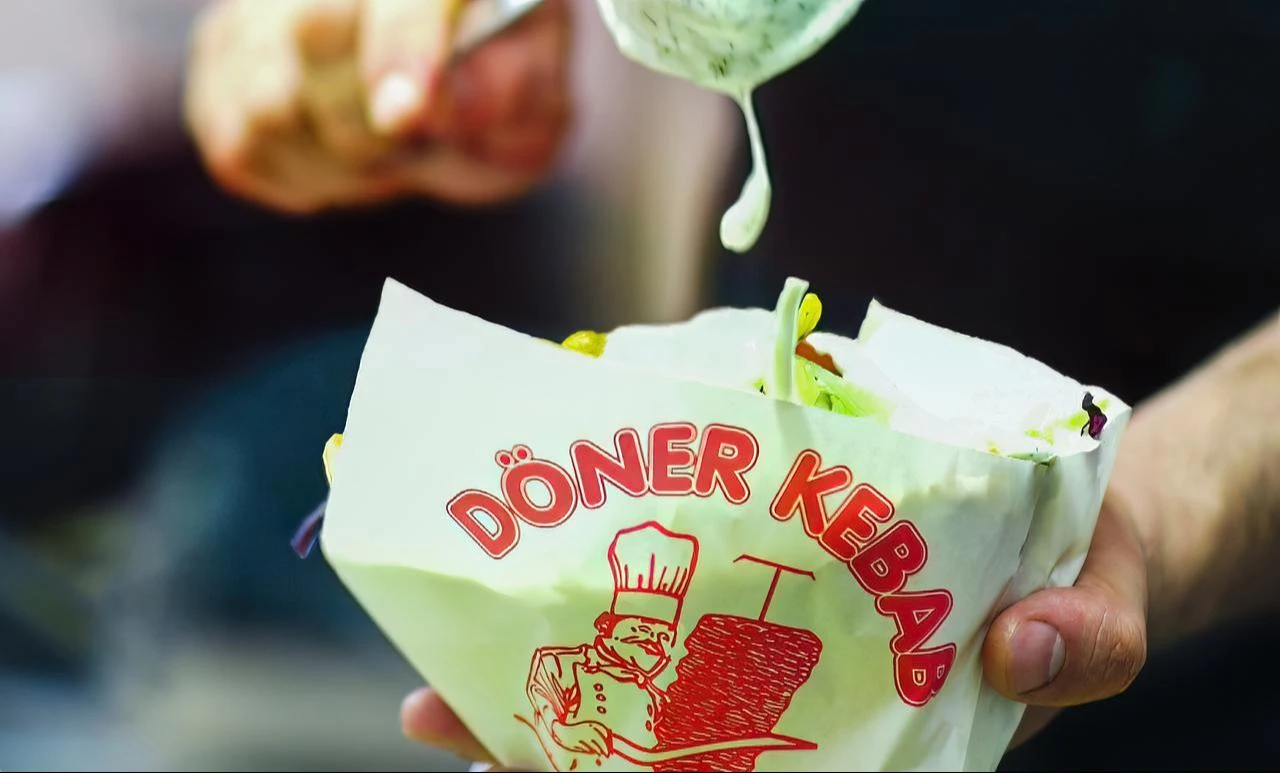
Photo shows a tasty doner kebab in a Turkish food booth in Germany, March 27, 2018. (Adobe Stock Photo)

Shop owners get free packaging, no payment
Kebab shop operators receive nothing in return for displaying the ads beyond the packaging itself, according to the ministry.
"The operators of the food stands voluntarily agree to the use of the advertising materials provided, and thus to their distribution. The restaurants receive the branded packaging free of charge," the ministry said.
Four thousand doner bags retail online for just over €30, an expense the participating shops now avoid, according to the Berliner Kurier. Both sides benefit modestly. The Bundeswehr gains attention, and the kebab shops get free packaging.
This is not the Bundeswehr's first venture into fast-food advertising.
In 2025, the military advertised on pizza boxes in southern Germany with the slogan "Hast Du auch viel drauf?" (roughly, "Do you have a lot going for you too?"), a pun referencing pizza toppings.

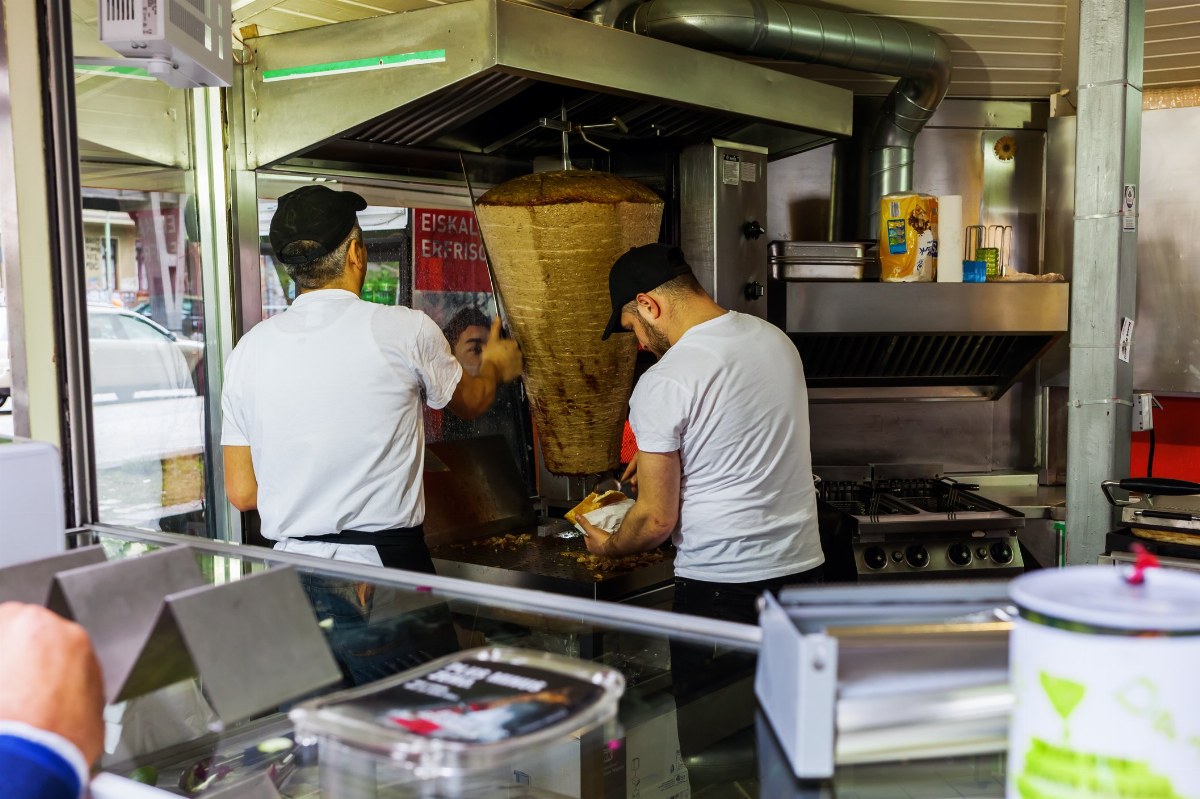
The photo shows a fast-food kebab in Siegen, Germany, on July 9, 2019. (Adobe Stock Photo)

Unclear effectiveness, but record recruitment numbers
How effective this style of recruitment advertising actually is remains difficult to quantify.
The Bundeswehr says it cannot demonstrate a direct link between individual advertising campaigns and subsequent applications, noting that career orientation often takes months or even years and that numerous other factors influence career decisions.
Still, the military has recently reported record numbers of applications and enlistments, with double-digit growth rates, among whom, the outlet noted, may well have been a doner enthusiast or two.

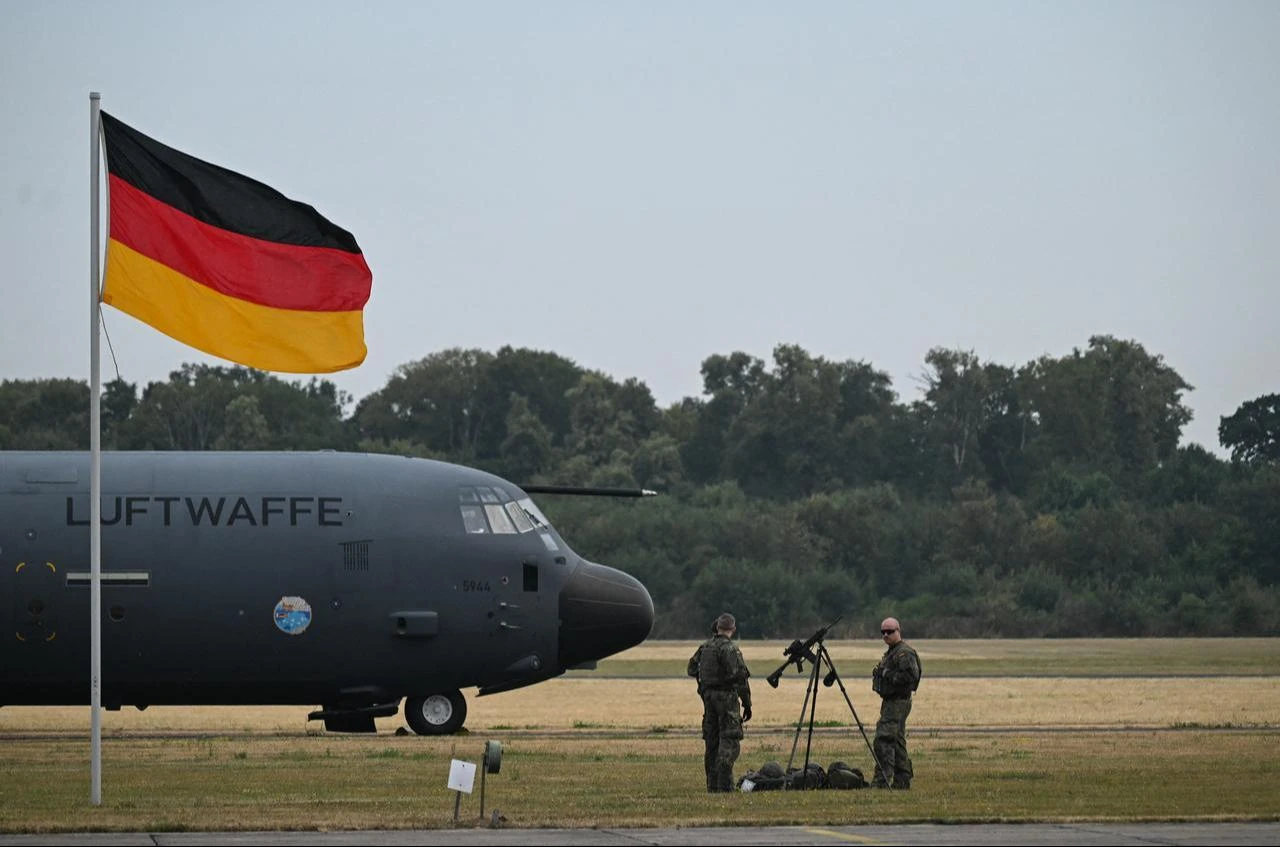
An Airbus A400M four-engine turboprop military transport aircraft of the German forces drives past a German flag at the Noervenich air base in Noervenich, western Germany, July 17, 2026. (AFP Photo)

Germany's broader military buildup
The doner campaign comes amid a broader Bundeswehr effort to expand its ranks.
Germany aims to increase the number of active-duty soldiers to 260,000 by 2035, up from about 183,000 at the end of last year, and to double its reserve pool to at least 200,000 members by the mid-2030s.
Chancellor Friedrich Merz told military leaders last year that Germany needed to become capable of defending itself as quickly as possible and needed more soldiers.
Defense Minister Boris Pistorius has said Berlin's ambition is "to be Europe's strongest conventional military," describing the military strategy as a "living document" while noting automation and artificial intelligence will continue to shape planning around troop numbers and required qualifications.
In July, the German government approved a draft law allowing the mandatory call-up of military reservists for training, abolishing a previous requirement that both the reservist and their employer agree to the call-up. In exchange, the military plans to make reserve service more attractive and give employers a longer notice period.
In March, Henning Otte, the parliamentary commissioner for the armed forces, said recruitment remains the Bundeswehr's biggest problem and that Germany may need to reinstate conscription if a voluntary recruitment scheme fails to attract enough people, Reuters reported.
Материал полностью.
Цитата:
Bundeswehr Launches Unique Recruitment Campaign Using Kebab Packaging


A spokesperson from the Berlin Ministry of Defense stated on Wednesday to Berliner Kurier that this recruitment drive targets not only young individuals considering their career paths but also those looking to change careers and skilled workers contemplating new professions.
The kebab packaging initiative falls under what the ministry describes as “ambient advertising”—recruitment materials placed in locations commonly frequented by potential candidates.
According to the ministry, kebab shops do not receive any financial incentives for participating; instead, they voluntarily agree to distribute these materials. “Restaurants receive free packaging with the logo,” the institution clarified.
Germany is not the first European nation to rethink its military recruitment strategy in recent years. In a 2019 advertising campaign, the British Army targeted “snowflakes,” “selfie addicts,” and “phone zombies.” Moreover, France launched a nationwide multimedia recruitment campaign in 2024, while the Netherlands has offered young people a chance to spend a paid year in uniform starting in 2023.
...
Материал полностью.
---------------------------------------------------- 12.04.2025.
Цитата:
12.04.2025, 11:07 GMT
Greasy recruitment: German army targets kebab lovers

Greasy recruitment: German army targets kebab lovers
Running out of soldiers, the Bundeswehr has turned to an unlikely ally: döner kebab wrappers. Germany’s army is now reportedly advertising on the paper that wraps your greasy, delicious döner.
Recruitment has never been so tasty.
Материал полностью.
При всей «оригинальности» подхода МО России к рекламе контрактной службы в СВО, а.п. не может себе представить, что бы подобную рекламную компанию попробовали реализовать в России.
Есть очевидная разница в отношении россиян и европейцев к своему служивому долгу, своей гражданской обязанности защиты родины и страны.
В России граждане, в основном, выбирают умом и сердцем, а в цивилизованной Европе - брюхом и кошельком.
____________________________________________________

С сожалением и с неаппетитными отраслевыми пожеланиями, Dimitriy.


Основное содержимое страницы с новостью.


DimitriyDimitriy 

: 25
: 12081
27/02/2007 .
: , .
: 07.07.2026 16:46  |  #153766

: .
:
12.51
:

.
. . , , - .


.

, , , .

, , , , , .

, .

:
> - , , - ;
> - , , - .

>, .. ... >, .

, (), , .

, , , , , .

:
Tue 7 Jul 2026 05.00 BST
Russian cities feel the pinch amid worsening fuel shortages.

Ukraines drone and missile campaign on oil infrastructure has brought impact of war to citizens of Moscow and elsewhere.

Five hours into the queue, tempers were already fraying at the gas station. Then a black Audi Q7 swept past dozens of waiting cars and pulled straight up to the pumps. Within minutes, motorists were shouting, mobile phones were recording and a police officer had drawn his pistol to calm the crowds.
The confrontation, filmed on Saturday night at a filling station in the Siberian town of Ust-Ordynsky, captured the growing frustration over Russias worsening fuel shortages, which have spread across a country that remains one of the worlds largest oil producers.
More than four years into the war, Ukraines campaign of long-range drone strikes on Russias oil infrastructure is increasingly being felt far from the frontlines.
After repeated attacks on some of the countrys largest refineries in recent months that have damaged roughly a third of the countrys oil refining capacity, Russias gasoline production has fallen by about 25% year on year, leaving filling stations struggling to meet demand during the summer holiday season and the agricultural harvest.
The shortages first emerged in Russian-occupied Crimea in May but have since spread across almost the entire country, with only two Russian regions reportedly unaffected. The fuel crisis has become one of the most visible disruptions to everyday life for many Russians since the full-scale invasion of Ukraine, challenging the Kremlins efforts to shield the public from the wars economic consequences.
For Putin, images of motorists waiting hours to fill their tanks are difficult to reconcile with his longstanding message that life has remained largely normal despite western sanctions and the war.
Mass fatigue with the war is turning into mass irritation, said Andrei Kolesnikov, a Moscow-based political analyst. Even so, he said the shortages were unlikely to trigger widespread protests in Russias tightly controlled political system. There is certainly shock, but the lack of any real means of influencing the situation and the risks associated with trying to do so make protests unlikely.
The disruption has become so severe that Russian officials acknowledged last week they were exploring fuel imports from Belarus, Kazakhstan and India an extraordinary step for a country that is normally one of the worlds largest exporters of refined petroleum products. The government is also considering temporarily relaxing fuel-quality standards to allow companies to produce lower-grade gasoline and diesel.
Analysts say the longer-term impact of the shortages will largely depend on whether Ukraine can sustain its campaign against Russias oil infrastructure. On Monday, Ukrainian drones struck the Omsk refinery in western Siberia, roughly 1,800 miles (2,900km) from Kyiv, in what appears to be Ukraines deepest strike yet against Russias energy infrastructure.
For now, the fuel crisis is already reshaping daily life and beginning to ripple through the wider economy. I could never have imagined we would be rationing fuel, said Anastasiya, an employee at a logistics company in Irkutsk, one of the Siberian cities worst affected by the shortages. She requested her last name be withheld for security reasons.
She said that several of the companys lorries carrying cargo had been stranded outside the eastern city of Chita for five days because drivers had been unable to find fuel. Its like the stories I heard about the Soviet Union, when people had to queue for food, Anastasiya added.
Taxi drivers are increasingly staying off the road. Industry representatives told the Russian business daily Kommersant that the fuel crisis had reduced journeys by about 20%, with ride-hailing drivers increasingly unwilling to accept longer trips for fear they would be unable to find fuel afterwards.
In southern Russia, one of the areas hardest hit by the shortages alongside eastern Siberia, authorities have deployed Cossack patrols to help maintain order at petrol stations in Black Sea resorts as public frustration mounts during the peak tourist season.
The shortages have given rise to a grey market last seen shortly after the fall of the Soviet Union. According to Novaya Gazeta Europe, petrol is now openly advertised on Telegram and the marketplace website Avito, with sellers in Russian-occupied Crimea offering to deliver fuel by taxi within four hours at heavily inflated prices.
Some motorists have started to find their luck abroad, crossing into Kazakhstan and China to fill their tanks, a practice that has become common enough to earn its own nickname: fuel tourism.
Even Moscow, the political and economic heart of the country that has largely been protected from the consequences of the war, has begun to feel the effects. Many petrol stations across the capital have temporarily closed after disruption at one of the citys largest refineries after a Ukrainian drone strike in June.
One positive is that Ive started walking more instead of constantly driving everywhere, one Muscovite said, estimating that waiting times for petrol had risen to between one and two hours.
The shortages are starting to take a toll on the Kremlins standing. According to polling by the independent Levada Center, Putins approval rating fell five percentage points in June to 74% its lowest level in four years while the share of Russians who said the country was moving in the right direction dropped from 61% in May to 52%.
Senior Russian officials have begun speaking more openly about the costs of the war. I dont believe there is anyone in this country whose primary concern is anything other than an end to military hostilities as soon as possible, German Gref, the powerful head of Sberbank, said recently.
There is little indication, however, that the Kremlin is preparing to change course. Over the weekend, Putin made a rare visit to the armys headquarters, wearing military fatigues as he hailed what he described as Russian battlefield successes and dismissed Ukraines claims of recent successes as an information and propaganda operation.
Putin, who rarely addresses domestic problems before they become unavoidable, was forced last month to acknowledge the shortages, telling state television that Russia was experiencing a certain deficit of fuel, but not a critical one. On state TV, the message to Russians has been blunter: endure.
Lets remember what weve already survived. Theres no petrol now? Well, my generation remembers when food was rationed, Margarita Simonyan, the editor-in-chief of RT and one of the Kremlins most prominent propagandists, said on her weekly programme on Rossiya 1 on Sunday.
I call on everyone to stay calm. Yes, its hard. Very hard But well get through this too. I have absolutely no doubt.

.

?

, , .

, , , , .

, , , , "" , - , .

, , , , (, , ..).

( - ), ( - ), , , .

, , , .
_________________


, Dimitriy.

DimitriyDimitriy 

: 25
: 12081
27/02/2007 .
: , .
: 14.07.2026 10:34  |  #153791

: .
:

:
09:20
.

. .

, , STOP, P (), Danger, Customs .

, . .

, . , . , , . , , , .

.

.

, , 1968 10807-71 1973, , , STOP, :

:
, , ( ..), .

[url=https://ru.wikipedia.org/wiki/___?ysclid=mrk9co4uhj514085391].[/url]

, , , , . , .

, , , .., , , ...

960px-_sign.svg.png

:


:
-----9687161.jpg
[url=https://thumbs.dreamstime.com/b/-----9687161.jpg] .[/url]


..
_________________

, Dimitriy.

DimitriyDimitriy 

: 25
: 12081
27/02/2007 .
: , .
: 15.07.2026 13:37  |  #153795

: .
:
: - .

" - , - . , , ", - .
...

.

.

.

?

.

, , , .

.

.

, .

?
.

.

.
.

?
, .

, , .

.

, , , ,

?
.

, , , ...
?
, ?
?
?
, ?

.
!

, .

, , .

, , - , , , , , - , , , !

, - -.
, - .

, , , .

, , , .

, , , .
_________________


, Dimitriy.

DimitriyDimitriy 

: 25
: 12081
27/02/2007 .
: , .
: 23.07.2026 14:39  |  #153819

: .
:

:

.
.

, - , , , .

, , .

, ! ! .

, - -, (

1 2 ) , , .

, - .

, .
, , .

: .

, .

, .

, .. .

, .
_________________


, Dimitriy.

DimitriyDimitriy 

: 25
: 12081
27/02/2007 .
: , .
: 23.07.2026 19:51  |  #153821

: ? .

- :

, :

, - .

?

, , ...

:

:
.

.

ᒺ , . ̳ , .

䳿
ᒺ, , . . , .


, 볺. , :
.
, .
.
, , . , , , .


ᒺ. , , . , .

.

:
.

. .

.

ϳ . , . , , .

ͳ . 28 , 11 .

ϳ . .

.

, , .

, , , - .

, , .
_________________


, Dimitriy.

DimitriyDimitriy 

: 25
: 12081
27/02/2007 .
: , .
: 06.08.2026 16:57  |  #153856

: ... .
:


:
19.35

, , 2.0.

, 100 , , . 1918 , , . , .

, , . , , . . , . .

2021 , . .

, . , .


:
13.45
"".

"" "" , - , " " . " " , "" .
" , - , , . , , . - ", - .

.
, "" .

, , - ... - .

.

, , - ..., .

. .. , - .

-.
, , .. , , , , .

, , .., .

, .. .

, , , .

, , , .

.

. , , .

, , , .

, .

, 1992 .

, , , , , , , , , .

90-, ....

90- .. / :

:

.

P.S.

:

1999 : .
.

P.S.S.

:

:

31 . 2026 .
.

.

_________________
, Dimitriy.

DimitriyDimitriy 

: 25
: 12081
27/02/2007 .
: , .
: 07.08.2026 18:52  |  #153861

: .
:
:
18.14
.

.

, , .

- , . . 14 .

, , , .

" " . , .
, ** **, , . , .

:

### 🕊 1.

- 2000 , .

* **, .

* : () . "Sent To Siberia" ( ).

* : . , , , .

### 🧀 2.

, , .

* : , , . , , , .

* : , , (, , ), . , .

### 🌱 3. ( )

, , .

* : , - ( ) .

* : , .

* : 14 .

### 🎙 4. :

.

* : YouTube-, .

* : , , . .

### 🚧

. :

*

, - .

* : , .

* : 30 , .

, . , , , , .

.

:
17.50

KP.RU , , , . 18.8 , , , . () . . , , .

.

:
16.47
30 , 📝.

, .

, , : . , 10 , , , . : 2021 .

🖍 - 1994 , . , 2000-, , . , , . .

, , , -. 2016- , . , .

🚩 , . , . 2024 702 , . . , , .

❓ : , . , , , , , . ?

, , , , , . ? ? ? ? .

❗️ . . , , : , ? , .

.


_________________
, Dimitriy.

DimitriyDimitriy 

: 25
: 12081
27/02/2007 .
: , .
: 09.08.2026 18:54  |  #153871

: ... .
:
:
23.07.2026, 10:13
: .

' .


. , , .
, , .
ᒺ , . .

.

:
23
: .

. 볺 , .

.

ᒺ , . , . .

, . , , . : .
, , , . . , , .

䳿

. 䳿 , . : , , .
. , ᒺ .
: . , , .

.


, ...

:
:
28 2026 14:27
. ?

: 20 .

RIA_2471005-pic_32ratio_900x600-900x600-7372.jpg

20 , . : , 23 , - 15 . .Ru.

--------------------------------------------------------------------------------------------------
20 , .
. FPV- 20 , .

, 23 , 10 , 15 , .

21 . , , . . . , , .
. 17 , . , . 8 : , .
, . , .

. .
. . . , .
: ( ..). : , . .
34 .
, . . , 5 . ( ..).
, , , [/b]( ..). 112. . .

, . , 25 . , .
, 150 .
, Telegram- Mash, 50 , . , , .

.

:
.
, .

qnzitkfnmad5_tku_ptgffglzivhdxmg_mjo_ufjlealpz125tzkc8m1nzaja28zvgwlfnmyj_fzzfya0l0bqcxr-533x533.jpg
:

. .
, . . , , .
, , . , , .
. , . , . 1015 . , 10-15 . , , .
112. . .

.

, .

, , .

P.S.

qnzitkfnmad5_tku_ptgffglzivhdxmg_mjo_ufjlealpz125tzkc8m1nzaja28zvgwlfnmyj_fzzfya0l0bqcxr-533x533.jpg
:

?
...!
, !
_________________

, Dimitriy.


DimitriyDimitriy 

: 25
: 12081
27/02/2007 .
: , .
: 17.08.2026 18:21  |  #153890

: .
:
Sun 16 Aug 2026 06.00 BST
The weekend is 100 years old but have skiveday Fridays and hybrid working ruined it for everyone?

In 1926, Henry Ford gave his employees both Saturdays and Sundays off and the two-day chunk of time to party, pray or simply do nothing was born. Now its changed beyond recognition.

4469ce4c44273bef36bb59edcda495dc.jpg

For 11 years, from 1929 to 1940, the Soviet Union did not have weekends. Instead, to increase productivity citizens were allocated a day off in every seven at random. With 80% of the population at work on any given day, factories never had to power down.
A letter from a disgruntled worker to Pravda newspaper, published soon after the implementation of this new working calendar, outlined the problems: What is there for us to do at home if our wives are in the factory, our children at school, and nobody can visit us? the letter-writer asked. It is no holiday if you have to have it alone. Parents found themselves at home while their children were at school, or with kids unsupervised while they were on shift. With no shared day off, extended family gatherings became impossible. The workforce became demoralised and listless, the projected spike in productivity never materialised, and the policy was first modified, then abandoned altogether.
Eleven years, though. Is that not absolutely wild? A world without weekends feels impossible. A world without Saturday Night Fever, without Manic Monday. We may no longer go to church on Sunday, but we still worship the weekend. The weekend looms large because it represents the triumph of collective time over market time, says Brad Beaven, professor of social and cultural history at the University of Portsmouth. It is not just about rest, but about reclaiming autonomy from the industrial clock.
Saturday and Sunday, sacred to the dignity and humanity of working people, are laden with mythology and ceremony. From Cilla Black to Gary Lineker, the main characters of our weekends become giants of the culture. We romanticise the weekend, even the prosaic bits the distant roar of a lawnmower, the rattle of classified football results on the radio. Everyone knows what a weekend means. The snap of a laptop cover at 4.58pm on a Friday. The clink of the first pint glass and the smell of chips on the way home. The slow-motion pace of a weekend pavement, the gear change from hustle to meander. The rituals have changed with the times, of course, and people-watching at brunch on Saturday is now as much of a tradition as cooking a roast at home on Sunday. A weekend changes shape as you move through life stages, but in each iteration it remains a shared experience between you and your peers.
The weekend that I had when I was 20 was very different from the weekend that I have now, at 40 and with kids, laughs Pedro Gomes, professor of economics at Birkbeck, University of London and author of the book Friday is the New Saturday. When you are young, you are bonding with your friends, and then when you get older, you might be with your family. Eventually, you might be with grandchildren. We move through different manifestations of the weekend, in our lifetimes.
But it can be hard to pin down, these days, where a weekend begins and ends. Laundry gets done on a work-from-home Friday, but emails are answered on Sunday. A shopping splurge is as likely to be a cheer-up treat on your phone after a tough Wednesday as a Saturday outing. The traditional Saturday 3pm football kick-off has been stretched across the television schedules all the way to Monday evening. The four-day week first predicted by Richard Nixon, of all people, in 1956 has become a reality in the Netherlands, with people working an average of 32.1 hours. Friday is forging ahead with a quiet secession from the working week without anyone signing off the paperwork. It raises the question: what even is the weekend in 2026?

_________________

Remarkably, the concept of the weekend as we know it is only 100 years old. In 1926, Henry Ford changed the shape of the week, announcing that the workers at his factories would now do five eight-hour days instead of six, with no cut in pay. Ford did not invent the weekend the idea had been bubbling under for a century, in campaigns by trade unions, religious groups and progressive employers but by putting his considerable industrial weight behind it, the two-day chunk of freedom was born.
It is high time to rid ourselves of the notion that leisure for workmen is either lost time or a class privilege, Ford wrote in his companys Ford News in October 1926. Fords innovation was in part a response to his earlier invention: the assembly line, which had increased productivity but exhausted workers, with absenteeism up to 10% in factories; in his article he did not disguise that there was self-interest involved. People who have more leisure require more transportation in vehicles, he continued. The new fashion for day trips was an effective marketing device to sell cars. Meanwhile, his factories maintained a steady level of productivity despite the reduced hours. In 1938, faced with rising unemployment levels in the Great Depression, the five-day week was officially adopted across the US.
On this side of the Atlantic, Boots the Chemist was the pioneer. In 1933, the company opened a new factory in Nottingham, which proved so efficient that there was soon a surplus of stock. Reluctant to lay his staff off with unemployment running at 25%, John Boot ended the Saturday morning shift, reducing hours for the 5,000-strong workforce without cutting wages. It was commercially successful, resulting in lower rates of absenteeism, and was adopted as Boots policy in 1934. A government inquiry led by Richard Redmayne great-grandfather, fun fact, of actor Eddie published a review of the experimental working of the five days week, which noted an improvement in stamina and animation of the employees arising from the physiological and psychological effects of a long weekends rest and relaxation. Slowly, the weekend gathered momentum. In the UK, the early 20th-century version of the weekend was generally recognised as a half-day Saturday and Sunday off, says Beaven. The full two-day weekend only really became widely adopted after the second world war.
Before industrialisation, there was little concept of consecutive days of leisure, because animals and crops could not be so long neglected. Work was dictated by the weather and the seasons, the clock mattering less than the sun. Factories, with their whistles and watches, changed the way time worked. A mechanised drumbeat of shifts and paydays drowned out the old rhythms of seasons and saints days.
As work became more rigidly organised, the possibility emerged that leisure could be, too. Time off wasnt merely a concession to workers, but also an engine of consumer capitalism. People with weekends would go to sports stadiums, buy picnic baskets and new clothes, need cinema tickets. By the late 20th century, with the arrival of cheap flights, this had evolved into the minibreak: a miniature holiday, designed to fit into a weekend. Leisure time, once the opposite of the economy, became part of it.
For generations, the British weekend revolved around one immovable appointment: the 3pm Saturday kick-off. The weekend is about rest, but it is also about passion, says Gomes. Most of us are not lucky enough to be passionate about our jobs, but at the weekend we can follow our passions. The link between football and the best day of the week is intrinsic to the national love affair with the sport. It is probably partly because football symbolised the best bit of the weekend that we ended up so obsessed with it.
Morals and the absence of them have always been a theme of the weekend. When Sunday, a time of worship, was the only day off, skilled workers developed a habit of extending their free time into Saint Monday, by not turning up for work after a particularly enthusiastic day of drinking. Saturday afternoons off and then the whole day were granted by employers partly in the hope of bringing the hangovers forward by a day. Victorian reformers, obsessed with drunkenness, hoped that free Saturdays would encourage respectable recreation: organised sport, gardening, family outings. Ford, a vehement supporter of Prohibition, believed that the illegality of alcohol made his move towards a two-day weekend safe. (A day off is no longer a day drunk, he said.)
The reality has never been quite so clean-cut. Weekends are naughty and nice, both bad behaviour and Sunday best. These are the days for shopping splurges and drinking sprees and hook-ups, but also for penance, whether by parkrun, DIY or actual prayer. Though perhaps less so the prayer bit: around one in three Britons attended church regularly in 1900, according to the National Centre for Social Research; now, this is number is around one in 20. Two moments stand out in the story of how Sunday lost its special place as a day, if not of worship, then of higher purpose. In 1994, the Sunday Trading Act allowed large shops in England and Wales to open on Sundays. Then, a quarter of a century later, pandemic lockdowns broke the now-fragile bonds between churches and their communities, and left many older parishioners with a wariness of gathering in ill-ventilated churches that might be bad for the health, even if good for the soul.

The late, great Maggie Smith had, as she so often did, the best line. What is a weekend? she asked, in Downton Abbey, with the entitled bewilderment of a dowager countess for whom income is spoonfed in silver from birth, not doled out in a brown envelope on a Friday night. The weekend is time carved out of, and in tension with, someone elses ownership of your time. Not to mention that for aristocrats, who had servants for everything from laying fires to buttoning their dresses, every day was a day of leisure. The weekend feels like a cornerstone of civilisation, of democracy, because it matters most to those who spend the majority of the week following orders instead of giving them.
These days, the upstairs-downstairs division is between the hybrid workers and those whose work can never be done remotely. An age-old division between shift work and the relative flexibility of white-collar jobs has deepened. Thinkers like Liselotte Lyngsø, founding partner of the Copenhagen-based consultancy Future Navigator, have argued that the workforce is splitting into time owners knowledge workers who increasingly choose where and when they work and time slaves, whose jobs, like healthcare, manual shift work or gig economy roles like Amazon or Deliveroo driving, remains stubbornly tied to the clock.
For the time owners, Friday is rapidly turning into the modern Saint Monday. It is an increasingly open secret that the last day of the working week has become, for remote workers, an unofficial half shift: calendar technically open, but both brain and laptop mostly on standby. When Gomes ran a six-month trial of four-day-week working in Portugal in 2023, with more than 41 public and private firms involved, organisations that cant reduce hours a nursery, for example worked in shifts with a different day off within each week. Other firms made the decision to cut Friday out. Whenever their weekday off was, we found that many employees approached that day a little differently, using it to get life admin done so that they could have their Saturdays and Sundays free. The weekend isnt just about the number of hours, it is also a coordination device for communities to connect.
As with Saint Monday, Skiveday Friday has proved in the UK to be stubbornly, if silently, adhered to. In 2024, Transport for London ran a three-month trial scrapping peak fares on Fridays explicitly in order to lure commuters back into central London. It failed, Fridays remaining quiet, despite the discount. For the laptopped-classes, there has been a shift in what Friday is for. Several major rail companies, including LNER and Avanti, have now made Fridays an entirely off-peak day like Saturday and Sunday, acknowledging that the weekend now begins earlier for many.
Though it should be noted that, for those same workers, Saturday and Sunday themselves are under constant siege from the mission creep of work emails and contactability outside working hours in the age of the smartphone. These are two sides of the same coin, says Gomes. Work intensifies, and the weekend expands in order to absorb the pressure. The speed of communication means that we now live with constant interruptions, and it is hard to find space either for deep work or for real rest. And yet we continue to structure the work week in much the same way as we did 100 years ago. It is no surprise that this isnt working.
Hence why a three-day weekend is being suggested as a way to balance the books. But is it all woke nonsense? A pie in the sky idea, dreamed up by a lazy workforce which no longer knows the meaning of hard work? The Green party supports a move towards a four-day week, but other politicians are wary. In 2025, the Liberal Democrat-led South Cambridgeshire council, which had been operating a four-day week for two years, was attacked by the then local government secretary, Steve Reed, who said that local governments should not be paying full-time wages for part-time work. In April this year, James Cleverly announced that a future Conservative government would look to ban four-day weeks for council staff, denouncing the push from the left of centre in British politics towards a four-day week as completely wrong.
The 4 Day Week Foundation, which is leading the drive for change in Britain, says that 56 out of the 61 companies who signed up for their four-day week pilot decided to stick with it after the scheme ended. They cite an average of 35% increased revenue, and 57% decline in staff leaving rates, during the trial. There are now 260 companies in the UK officially signed up to the four-day week.
The divide between time sharers and time slaves, those working five-day weeks, four-day weeks or more ad-hoc, less weekend-friendly shift work is problematic because the weekend is designed to be shared. Its where British culture learned to gather, a collective experience. Every generation has its own shared rituals. Boomers love a Saturday night movie, generation X are obsessed with Sunday lunch, millennials love to flock to a farmers market, while gen Z, for some reason, get their kicks standing in line for baked goods that have gone viral on TikTok. Even the Sunday scaries are made manageable by the knowledge that everyone out there is feeling the same. As a gulf widens between the time owners and time slaves, between inherited wealth and the increasingly weedy salary pipeline the weekend starts to feel less like an experience, and more like a nostalgic memory.
It is funny to think that, at first, technology expanded our horizons. Railways gave ordinary people access to the coast; mass production made bicycles and cars affordable. It is only recently that technology has mutated into the energy vampire it is today, sucking the life from the weekend.
Only in the last decade has online autobiography become everybodys unpaid side hustle, so that your friends have already seen your holiday photos before you meet them for brunch. It is a very modern phenomenon that our friendships have migrated online, this weeks boy drama or family quarrel already debated at length in text bubbles and voice notes without the need to meet in the pub. Add to this the post-pandemic normalisation of the soft commitment, in which making plans and cancelling them have become two parts of the same social ritual and Ill see how I feel has become an acceptable RSVP, and we have become less good at a core element of the weekend, which is actually seeing other people.
Perhaps we shouldnt fret so much. Ever since we invented the weekend, we have been anxiously taking its pulse. The Victorians worried that workers would waste their precious leisure days drinking. Mid-century Britain feared television was keeping families indoors. Todays concern is that we spend Saturday scrolling Instagram and Sunday answering emails. The rituals change; the suspicion that the weekend is being ruined remains. Yet the weekend survives, perhaps because it has never demanded perfection. The lie-in and the late night are equally valid forms of resistance. Its holiest rites the greasy fry-up, the football terrace, Saturday-night shiny-floor television are gloriously unrefined. The weekend is where a good time still trumps good taste.
The Soviets discovered that a day off is not much use unless other people are off, too; Ford understood that workers needed time in which to become themselves again, even if he hoped they would spend it buying cars. At 100, the two-day weekend is fraying at the edges, leaking into Friday and nibbled away by Sunday night emails. The weekend will keep changing, because work keeps changing. But it will still always be the best thing work ever invented.

.

_________________
, Dimitriy.

DimitriyDimitriy 

: 25
: 12081
27/02/2007 .
: , .
: 22.08.2026 23:31  |  #153904

: .
:
:

21.08.2026
EXPLAINED: Why German Army Is Using Kebab Shops To Find Soldiers

.

:
Germanys military has a new recruiting tool: Kebab wrappers
The recruitment campaign comes as Berlin seeks roughly 73,000 additional active troops over the next decade.

German kebab shops want you for the countrys army: German citizens can now join the Bundeswehrs medical service by scanning QR codes on street-food wrappers nationwide.
A defense ministry spokesperson told German outlet Berliner Kurier on Wednesday that the new recruitment campaign aims to reach not only young people deciding on a career but also career changers and skilled workers considering a new profession.
The kebab wrappers form part of what the ministry calls ambient advertising recruitment materials placed in locations where potential applicants go about their daily lives. The kebab joints themselves dont get paid, and operators voluntarily agree to distribute the material, according to the ministry.
The restaurants receive the branded packaging free of charge, it said.
Germany isnt the first European country to rethink its military recruitment pitch in recent years: In a 2019 advertising campaign, the British Army targeted snowflakes, selfie addicts and phone zombies. France launched a nationwide multimedia recruitment drive in 2024, and the Netherlands has been offering young people the chance to spend a paid year in uniform since 2023.
The unconventional recruitment strategy comes as Berlin races to expand its armed forces. The Bundeswehr counted 186,705 active troops at the end of July its highest level in 13 years but aims to reach more than 260,000 by 2035 to meet NATO capability targets.

.

:
German army turns Berlin doner shops into recruitment stations.
bundeswehr-turns-berlin-doner-shops-into-recruiting-stations-3226528_20260821133649.jpeg
Photo shows a Doner Kebab wrapped in branded paper, served on a black plate atop a table in Hannover, Germany, February 17, 2026. (Adobe Stock Photo)

Germany's armed forces, the Bundeswehr, have begun advertising for recruits on doner kebab wrapping paper distributed at Berlin food stands, the latest recruitment tactic as the military works to expand its ranks amid what officials describe as a growing threat from Russia.
Customers picking up a doner kebab in Berlin's Lichtenberg district and elsewhere are now finding a career pitch tucked between the meat, garlic sauce and red cabbage.
The wrapping paper comes in camouflage colors bearing the slogan "Einmal Karriere mit alles", "One career with everything," a play on a common doner order, according to the Berliner Kurier.
The paper carries a QR code linking to bundeswehrkarriere.de, a website recruiting soldiers nationwide for the medical service.
Asked about the campaign, the Defense Ministry said it seeks potential applicants wherever they spend their everyday lives, "from social media to the train station," or, in this case, the doner shop.
"With a wide range of advertising tools, we reach not only young people in their career orientation phase, but also career changers and skilled workers who want to make a professional change and could see themselves with a future at the Bundeswehr. This portfolio also includes so-called 'ambient' measures. The doner bags fall under that," a ministry spokesperson said.

bundeswehr-turns-berlin-doner-shops-into-recruiting-stations-3226528_202608211336_20260821133649_1.jpeg
Photo shows a tasty doner kebab in a Turkish food booth in Germany, March 27, 2018. (Adobe Stock Photo)

Shop owners get free packaging, no payment
Kebab shop operators receive nothing in return for displaying the ads beyond the packaging itself, according to the ministry.
"The operators of the food stands voluntarily agree to the use of the advertising materials provided, and thus to their distribution. The restaurants receive the branded packaging free of charge," the ministry said.
Four thousand doner bags retail online for just over 30, an expense the participating shops now avoid, according to the Berliner Kurier. Both sides benefit modestly. The Bundeswehr gains attention, and the kebab shops get free packaging.
This is not the Bundeswehr's first venture into fast-food advertising.
In 2025, the military advertised on pizza boxes in southern Germany with the slogan "Hast Du auch viel drauf?" (roughly, "Do you have a lot going for you too?"), a pun referencing pizza toppings.

bundeswehr-turns-berlin-doner-shops-into-recruiting-stations-3226528_202608211336_20260821133649_2.jpeg
The photo shows a fast-food kebab in Siegen, Germany, on July 9, 2019. (Adobe Stock Photo)

Unclear effectiveness, but record recruitment numbers
How effective this style of recruitment advertising actually is remains difficult to quantify.
The Bundeswehr says it cannot demonstrate a direct link between individual advertising campaigns and subsequent applications, noting that career orientation often takes months or even years and that numerous other factors influence career decisions.
Still, the military has recently reported record numbers of applications and enlistments, with double-digit growth rates, among whom, the outlet noted, may well have been a doner enthusiast or two.

bundeswehr-turns-berlin-doner-shops-into-recruiting-stations-3226528_202608211336_20260821133649_3.jpg
An Airbus A400M four-engine turboprop military transport aircraft of the German forces drives past a German flag at the Noervenich air base in Noervenich, western Germany, July 17, 2026. (AFP Photo)

Germany's broader military buildup
The doner campaign comes amid a broader Bundeswehr effort to expand its ranks.
Germany aims to increase the number of active-duty soldiers to 260,000 by 2035, up from about 183,000 at the end of last year, and to double its reserve pool to at least 200,000 members by the mid-2030s.
Chancellor Friedrich Merz told military leaders last year that Germany needed to become capable of defending itself as quickly as possible and needed more soldiers.
Defense Minister Boris Pistorius has said Berlin's ambition is "to be Europe's strongest conventional military," describing the military strategy as a "living document" while noting automation and artificial intelligence will continue to shape planning around troop numbers and required qualifications.
In July, the German government approved a draft law allowing the mandatory call-up of military reservists for training, abolishing a previous requirement that both the reservist and their employer agree to the call-up. In exchange, the military plans to make reserve service more attractive and give employers a longer notice period.
In March, Henning Otte, the parliamentary commissioner for the armed forces, said recruitment remains the Bundeswehr's biggest problem and that Germany may need to reinstate conscription if a voluntary recruitment scheme fails to attract enough people, Reuters reported.

.

:
Bundeswehr Launches Unique Recruitment Campaign Using Kebab Packaging

naa-njSBJz7w.jpg


A spokesperson from the Berlin Ministry of Defense stated on Wednesday to Berliner Kurier that this recruitment drive targets not only young individuals considering their career paths but also those looking to change careers and skilled workers contemplating new professions.
The kebab packaging initiative falls under what the ministry describes as ambient advertisingrecruitment materials placed in locations commonly frequented by potential candidates.
According to the ministry, kebab shops do not receive any financial incentives for participating; instead, they voluntarily agree to distribute these materials. Restaurants receive free packaging with the logo, the institution clarified.
Germany is not the first European nation to rethink its military recruitment strategy in recent years. In a 2019 advertising campaign, the British Army targeted snowflakes, selfie addicts, and phone zombies. Moreover, France launched a nationwide multimedia recruitment campaign in 2024, while the Netherlands has offered young people a chance to spend a paid year in uniform starting in 2023.
...

.

---------------------------------------------------- 12.04.2025.

:
12.04.2025, 11:07 GMT
Greasy recruitment: German army targets kebab lovers

Greasy recruitment: German army targets kebab lovers

Running out of soldiers, the Bundeswehr has turned to an unlikely ally: döner kebab wrappers. Germanys army is now reportedly advertising on the paper that wraps your greasy, delicious döner.
Recruitment has never been so tasty.

.

, .. , .

, .

, , , - .
_________________


, Dimitriy.

Схожие новости

#Наименование новостиТональностьИнформативностьДата публикации
1«Шаурма зовёт в армию»: Бундесвер завербует молодых немцев через стритфуд09.2521-08-2026
2От 298 тысяч анкет до 530 солдат: план Берлина по наращиванию войск трещит по швам-2725-06-2026
3Вооруженные силы стран ЕС сфокусировались на вербовке молодёжи в соцсетях07.4117-08-2026
4Job-Offensive am Drehspieß: Bundeswehr serviert Karriere zum Döner011.119-08-2026
5Euractiv: Страны Европы запустили рекламу армейской службы в соцсетях06.6915-08-2026
6German army recruitment drive collapses-2626-06-2026
7Бундесвер не смог собрать бригаду для размещения в Литве ============================= ...-2721-07-2026
8Euractiv: армии Европы запускают кампании в соцсетях для привлечения молодежи06.616-08-2026
9Rekrutierung als Lifestyle-Event?: Werbung für den Wehrdienst gehört verboten-8618-06-2026

Классификация: . Схожих патентов: 0. Схожих новостей: 9. Тональность: 0. Информативность: 11.65. Источник: www.advertology.ru.