Просмотр новости
Найдите то, что Вас интересует
 Спутники
 РН
РН SpaceX
 Роскосмос
 NASA
NASA
СпутникиРНSpaceXРоскосмосNASA
Data breaches are exploding, but you can reclaim your privacy with a mix of manual steps and some automated tools.
(via Cult of Mac - Your source for the latest Apple news, rumors, analysis, reviews, how-tos and deals.)
 Reclaiming your online privacy is perfectly doable.
 Somewhere out there, a data broker has your name, address and phone number for sale. If you want to remove your personal information from the internet, the process is easier than it sounds.
Data breaches hit a new high this year, and hundreds of broker sites now buy and sell your details without asking. The good news: Reclaiming your privacy doesn’t take a law degree, just a mix of manual steps and automated tools.
According to the Identity Theft Resource Center’s 2024 Annual Data Breach Report, victim notices rose nearly 211% year-over-year. Separately, the Federal Trade Commission’s Consumer Sentinel Network logged 1.1 million identity theft reports the same year.
YouGov Profiles data show that three in five Americans — about 62% — worry about how much of their information is available online. And security incidents are climbing fast, too. YouGov found that a whopping 48% of people experienced a security failure last year. That’s up from 34% in 2023.
It’s not just spam and robocalls The best way to stop spam robocalls is to stop data brokers from collecting and selling your data.
The risks aren’t just financial, either. Court filings in a 2025 Minnesota shooting case showed that the suspect had compiled notebooks listing multiple people-search sites. He then allegedly used them to find targets’ home addresses.
This is a stark reminder that a data broker listing can carry real-world danger, not just spam and robocalls. Many Americans have been uneasy about how little control they have over their own data.
A significant percentage of the population believes that they should have the right to get their information removed from online searches entirely. If you feel the same way, here’s a step-by-step approach to cleaning up your online presence.
What counts as personal informationBefore diving into removal steps, it helps to know what you’re actually trying to protect. Personal information is data that relates to you, but personally identifiable information (PII) is a narrower category.
PII is the data that can be used on its own to identify you specifically. Some of it, like property records and court filings, is public by default, while other pieces of PII data are nonpublic and more sensitive.
These include your full name, contact information, date of birth, sex and marital status. Financial records, medical records and your Social Security number fall into this bucket, too. So do your employment history and any criminal or court records tied to your name.
Delete accounts you no longer useOld accounts are a liability, even those you’ve forgotten about. Dormant logins on shopping sites and apps you used only once still store your name, email and payment details. To check these, go through your password manager or inbox for old sign-up confirmations.
Try to close anything you no longer use. But most services bury the delete option somewhere deep inside, so you may need to search “how to delete my account” plus the service’s name.
Opt out of data broker and people-search sites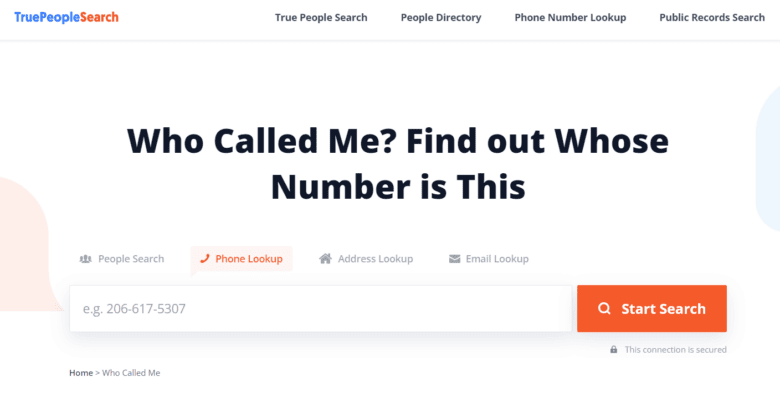 TruePeopleSearch’s reverse phone lookup lets you see who called you.
This is where most of the heavy lifting happens. Data brokers and people-search sites gather your name, address, relatives and more, and sell that information to anyone willing to pay.
You can go broker by broker using each site’s opt-out form, but the process is extremely tedious. You might have to contact thousands of sites. New listings also pop up as fast as you remove old ones.
This is exactly why services like Incogni, a frequent advertiser on Cult of Mac, exist. Incogni automates opt-out requests across more than 420 data brokers. On top of that, Incogni’s Custom Removals feature covers more than 3,500 unique domains on top of that, for a combined reach of roughly 4,000 sites.
The service also keeps resending those requests at regular intervals, so your data doesn’t quietly reappear.
Deloitte compiled an Independent Limited Assurance Report on Incogni in August 2025, and the results back up those numbers. The report confirmed that Incogni covers more than 420 data brokers and receives removal confirmations from them.
It verified Incogni’s resubmission schedule: every 60 days for public brokers and every 90 days for private ones. Deloitte also confirmed that Incogni did not sell customers’ personal data.
Continuous scanning, and a new Exposure ScannerIncogni’s service has processed more than 245 million data removal requests since 2022. Incogni earned an A+ rating from the Better Business Bureau and also won PCWorld’s Editors’ Choice Award last year.
Under the hood, Incogni scans more than 260 people-search sites directly. It uses the minimal information you provide: up to three phone numbers, three emails and three addresses.
And for the 160 private database brokers that can’t be scanned the same way, Incogni sends official, legally binding removal requests on your behalf. But even after your data is deleted, brokers often collect it again over time.
That’s why Incogni keeps sending fresh requests on a recurring schedule instead of stopping after the first success.
As of 2026, Incogni’s Unlimited plans now feature a new Exposure Scanner, which continuously scans the web, finding sites that list a user’s personal information. It then gathers all the results in one place, making it very simple for users to decide what they want to have removed.
The Unlimited tier also unlocks Custom Removals, so you can easily submit takedown requests to these sites outside the standard broker list. Throughout the process, you can track potential databases found, requests sent, and requests completed from your Incogni dashboard.
This makes Incogni a proactive tool, rather than just a reactive one.
Individual and family plans are currently available at 50% off. That works out to $7.99 a month for individuals, or $15.99 a month for a family plan covering up to five people. Use code CULTOFMAC to bump the discount to 55%.
Scrub your personal data
Incogni | Personal Information Removal Service
From $7.99 a month
Your personal data is an open door for scammers, spammers and unscrupulous businesses. Incogni is an easy-to-use data scrubbing service that helps remove your personal data from the internet.
Save 55% when you use code: CULTOFMAC
Pros:
Cons:

You can check to see what strangers know about you using Incogni’s free data scanner.
The data scanner searches the internet and data broker databases to see where your personal information is publicly exposed or sold.
The scan is free and doesn’t require an account.
Ask Google to remove your information from search results Google has an easy-to-use form for removing your personal data from search.
You can also stop your information from showing up on Google. The company has a tool that helps you remove information like your address, phone number, and Social Security number.
Just give it the URL where your data appears, and Google will review it for removal. While it won’t remove the underlying page, the tool does help keep it out of search results.
Contact websites directlyAlternatively, you can contact website owners directly and ask them to remove personal information about you. More often than not, a polite email explaining that a page contains your personal data works, especially with smaller sites.
To remove personal data from a website, look for contact information or opt-out links in specific locations:
 Clean up your apps and online accounts.
Smartphone apps are another point of data leakage. From your location to shopping habits, many apps and services collect far more data than you might expect. So open your phone’s settings and review every app’s permissions.
Review permissions by app on your iPhone:
Check the App Privacy Report:
Make sure to delete any apps you no longer use, and while you’re at it, check the security settings on your most important accounts. You can start with your social media profiles, since they’re the most public-facing.
Set accounts to private if possible, and remove posts that reveal your address, workplace or daily routine. Also, review your browser and Google account’s privacy settings, as they may be tracking and storing more than you realize.
Why your personal information ends up online in the first placeYour data doesn’t leak from just one source. Public records like property and court filings can be searched by anyone.
Data brokers and people-search sites, including names like Public Record Search, SearchQuarry and Sync.me, resell that information. They may also include details from state and federal databases.
Social media adds another layer on top, because even a “private” profile can leak data via tagged photos or mutual friends. From online shopping to email newsletters, everyday accounts also build a profile of your habits over time.
If you understand where the data comes from, it makes it easier to cut it off at the source.
How to protect your personal information going forward Social media is a great place to leak sensitive personal info.
Removing existing data is only half the battle. Going forward, make sure you remain mindful of what you share in the first place. This includes social media, online forms and apps requesting more access than they need.
Together, these habits will make it harder for anyone trying to build a detailed profile of you. Deleting old accounts, opting out of brokers, and tightening app permissions all eventually add up.
The bottom lineYou can’t make yourself invisible online. But you can make it significantly harder for others to find and exploit your information. Start with the basics: Delete what you don’t use, lock down what you keep, and use a service like Incogni to handle the tedious work of chasing down data brokers. Small, consistent steps add up to a smaller digital footprint over time.
Scrub your personal data
Incogni | Personal Information Removal Service
From $7.99 a month
Your personal data is an open door for scammers, spammers and unscrupulous businesses. Incogni is an easy-to-use data scrubbing service that helps remove your personal data from the internet.
Save 55% when you use code: CULTOFMAC
Pros:
Cons:

Anurag Chawake is a tech-focused writer specializing in smartphones, apps and consumer technology. His interest in computers began during the Windows 98 era, eventually leading him to explore everything from operating systems to mobile devices and PC hardware. Anurag previously contributed to The Indian Express, covering Apple, Android, gaming and the broader technology landscape.

| # | Наименование новости | Тональность | Информативность | Дата публикации |
|---|---|---|---|---|
| 1 | Apple wants to stop you from blindly trusting AI agents | 0 | 26.45 | 03-10-2026 |
| 2 | iCloud feeling cramped? Get 1TB of cloud storage for life, just $39.99. | 0 | 19.84 | 25-09-2026 |
| 3 | 5 Macs rumored to launch in the coming months | 0 | 27.29 | 28-09-2026 |
| 4 | John Ternus is on a tear at Apple! [Cult of Mac podcast 35] | 0 | 21.25 | 03-10-2026 |
| 5 | Stop overpaying for airfare: Get a lifetime Matt’s Flights subscription for just $39.99 | 0 | 21.08 | 02-10-2026 |
| 6 | Apple Creator Studio gets a big batch of new features | 0 | 20.91 | 30-09-2026 |
| 7 | Google bug causes thousands of iPhone apps to crash overnight | 0 | 23.23 | 29-09-2026 |
| 8 | Apple’s new iPhone ad couldn’t try any harder to make Android phones look ancient [Video] | 0 | 19.99 | 04-06-2026 |
| 9 | 8 hot products to expect from Apple in October | 0 | 25.64 | 03-10-2026 |
| 10 | Find your next rental property with Mashvisor, just $99.99 for life | 0 | 23.38 | 26-09-2026 |