Просмотр новости
Найдите то, что Вас интересует
 Спутники
 РН
РН SpaceX
 Роскосмос
 NASA
NASA
СпутникиРНSpaceXРоскосмосNASAJERUSALEM (VINnews) — A 13-year-old boy killed Monday when an unexploded munition detonated during a school trip in northern Israel has been identified as Yair Vilensky of Ma’alot-Tarshiha. Several other students and a teacher were injured in the explosion, which occurred in the Ramim Ridge area of the Galilee Panhandle which is adjacent to the […]
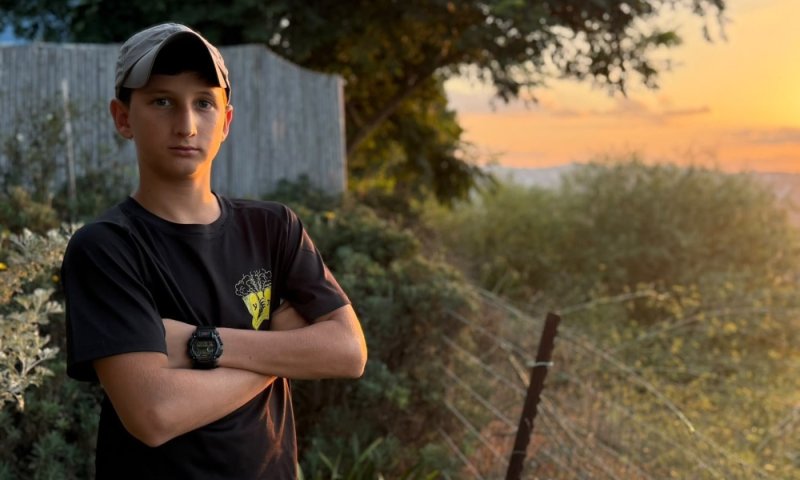
JERUSALEM (VINnews) — A 13-year-old boy killed Monday when an unexploded munition detonated during a school trip in northern Israel has been identified as Yair Vilensky of Ma’alot-Tarshiha. Several other students and a teacher were injured in the explosion, which occurred in the Ramim Ridge area of the Galilee Panhandle which is adjacent to the Lebanese border.
Subscribe to our Daily Roundup Email
Yair, the youngest of five children, is survived by his parents, three sisters and a brother. He was a ninth-grade student at the ORT religious high school in Ma’alot. In a statement mourning his death, his family described him as a bright, joyful and much-loved boy whose life was cut tragically short.
“Yair was a boy who loved life. Intelligent and wise, full of joy, a good and beloved friend, with his entire future still ahead of him,” the family said.
The mayor of Ma’alot-Tarshiha, his deputies, city council members and municipal employees expressed their condolences to the grieving family. The municipality said its welfare services and educational psychology teams were providing emotional support to the families of those injured, students and school staff.
Several people injured in the explosion remained hospitalized Tuesday morning. Rambam Medical Center in Haifa reported that a 61-year-old teacher underwent surgery overnight and remained in serious condition. A student who suffered shrapnel wounds to his neck was hospitalized in moderate condition and was fully conscious. Two other students were being treated for minor injuries.
Additional casualties were receiving treatment at other hospitals in northern Israel.
Dr. Nadav Sleifer, head of pediatric surgery at the Galilee Medical Center, told Ynet that the injured students had suffered blast injuries and shrapnel wounds. He said the students under his team’s care were stable and no longer in immediate danger, although their recovery would depend on the severity of their injuries. Some could be discharged within a day, while others would require several more days of hospitalization.
According to accounts from parents and students, members of the school group discovered an unexploded munition during their hike and began examining it, playing with it and taking photographs. Eliyahu Galil, the father of one of the students who participated in the trip, said his son sent him a photograph of the munition after the incident.
According to Galil, the students were excited by the discovery, and one of them placed the object inside a backpack, where it subsequently exploded. Students reportedly said they had not noticed a warning sign near the area cautioning against entering because of the danger posed by unexploded ordnance.
The circumstances surrounding the explosion, including how the students came into contact with the munition and whether appropriate safety precautions were followed, are expected to be examined. According to preliminary findings reported by Israeli media, the explosive device was believed to be a cluster munition fired by Hezbollah during the recent fighting along the Lebanese border.
The explosion killed Yair and injured 24 others. Tuesday morning reports indicated that four of the injured were in serious condition, seven were moderately injured and 13 had sustained minor injuries.
The IDF closed the area following the explosion amid concerns that additional unexploded munitions remained nearby. Northern Command officials estimate that thousands of unexploded devices remain scattered across northern Israel following the war, many originating from Hezbollah rocket and artillery attacks.
Israel’s Education Minister Yoav Kisch subsequently examined whether school trips in northern Israel should be temporarily suspended. Authorities instead decided to reroute excursions away from areas identified as potentially dangerous.
The tragedy has raised urgent questions about the safety of hiking trails near the Lebanese border, particularly in areas where unexploded ordnance may remain hidden long after the fighting has ended. According to i24NEWS, the school group entered an area where a Jewish National Fund warning sign prohibited entry because of ongoing rehabilitation work. The JNF said the warning remained in effect.