Просмотр новости
Найдите то, что Вас интересует
 Спутники
 РН
РН SpaceX
 Роскосмос
 NASA
NASA
СпутникиРНSpaceXРоскосмосNASAEurope sure could use Libya’s oil, gas, and petrochemical products now, but the self-destructive policy there is illuminating today.
Remember this?
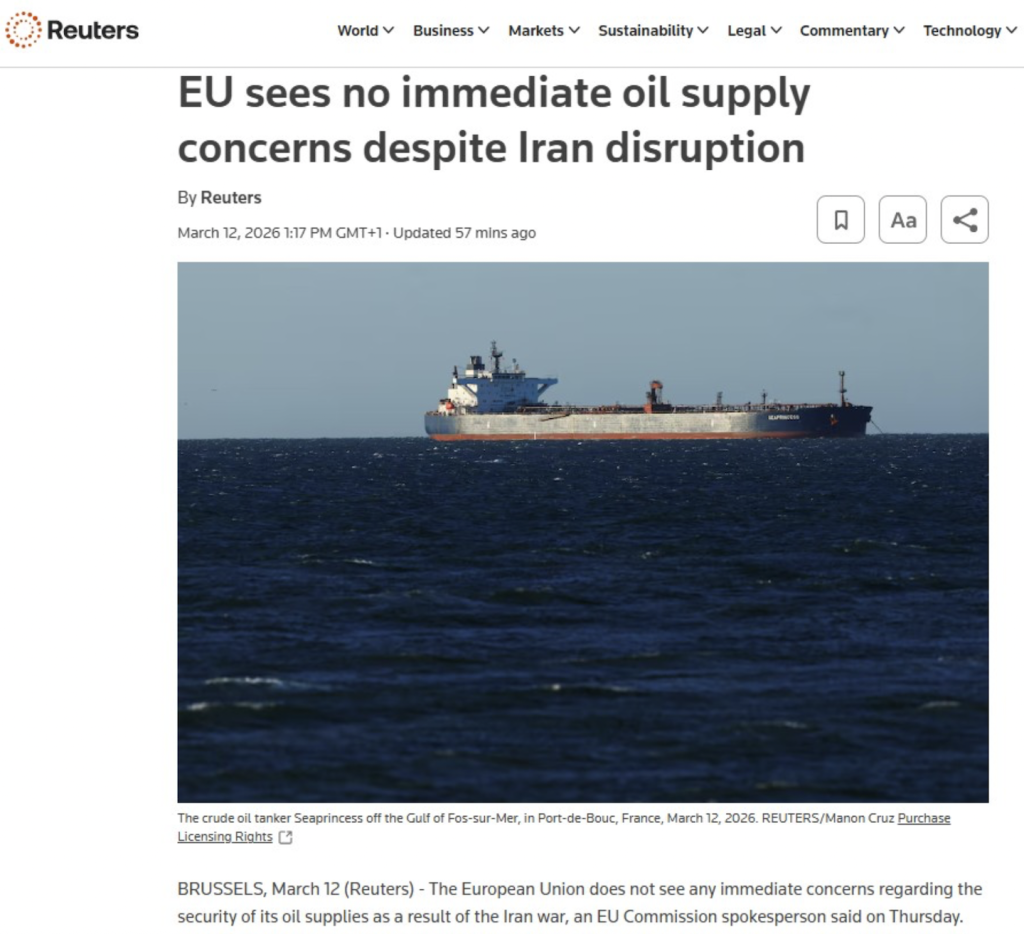
How quickly times can change. That was a mere six weeks ago, and six weeks hence Europe is expected to be running on jet fuel empty—as well as facing a host of other potential shortages—should the Strait of Hormuz not reopen. Seeing as it looks more likely the Bab el Mandeb will officially close too rather than Hormuz reopen, hard times are in store for Europeans. And we’re already seeing massive fuel protests in Ireland that are shaking the government.
Europe is once again trying magical thinking with regards to oil and gas supplies from Algeria in order to make up lost quantities from the Middle East, but there are a host of issues there which will limit how much Algiers can cushion the blow of the Hormuz closure.
Algeria’s neighbor to the East, however, has the 19th largest known gas reserves in the world—roughly the same as Norway—and it holds Africa’s largest proven crude reserves. There’s a problem there, however.
Back in 2011, EU nations helped turn Libya into a failed state. Sure they got to steal the country’s wealth and the slave market was vibrant, but the oil and gas market predictably collapsed. Oops. That sure could come in handy right about now.
And so on top of all the death, the slave markets, untold human suffering, destabilization of much of North Africa and the Sahel, refugee crisis, etc., the loss of a reliable partner for the EU providing much needed resources is yet another reason it was such mistake to collapse Libya.
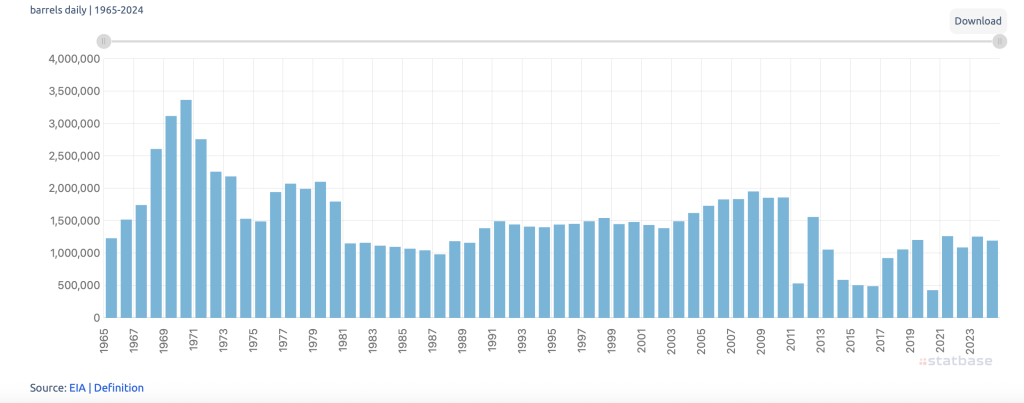
Prior to the NATO destruction of the country and brutal murder of the country’s former leader Muammar Gaddafi, Libya was producing around 1.65 million barrels per day (bpd) of mostly high-quality light, sweet crude oil, particularly in demand in the Mediterranean and Northwest Europe, and the proximity of Libya to Europe is a big advantage in terms of ease and cost of transportation. During the few post-sanctions years after 2003 before Libya was wrecked in 2011 nearly all Libyan oil was sold to European countries.
While production was trending upwards during that period, it then collapsed and has yet to fully recover:
The NATO collapse of Libya also destroyed a nascent petrochemical industry. From a 2007 piece in Middle East Business Intelligence:
Tripoli’s focus is on the two projects to upgrade its existing facilities. Under a headline deal signed in late April, a consortium of Dow and state-owned National Oil Corporation (NOC) will overhaul the Ras Lanuf petrochemicals complex. Within days of that deal, Yara signed a similar agreement to overhaul the Marsa el-Brega ammonia/urea complex.
Joint venture agreements are on track to be signed in early 2008 to cement the existing headline agreements for the two projects. Given its years of international isolation and the chronic lack of investment in downstream infrastructure characterising the period, the recruitment of two internationally recognised companies to bring the country’s existing infrastructure up to modern standards is no small achievement.
Libya still had a ways to go to develop the surplus gas supply necessary for a major petrochemicals program, but it easily could have been there by now. On the gas front, supplies to Europe have also declined from 9.26 billion cubic meters (bcm) in 2010 to 1.33 bcm in 2024, and although Libya has one pipeline that goes to Italy, its volume, when actually flowing, is well below capacity. Italy, cut off from most Libyan and Russian gas, turned increasingly to Qatar, and that’s not working out so well.
There are now announcements that Tripoli and whoever is in charge this month is reviving another pipeline project that has been stalled for 16 years since the EU helped destroy the state. That pipeline, along with improvements to and a steadier supply through the existing Greenstream pipeline to Italy could help Libya dramatically boost its exports to Europe by 2030. Yet Libya remains a broken state, and betting on those supplies in the next 4-5 years is wishful thinking.
Washington to Bring Peace and Profit to Libya…And Expel the Russians
The US just held joint military exercises with the two rival factions that dominate the country. According to the Wall Street Journal, this was a sign that the US is not only squeezing Moscow out of Libya, but that Washington is about to bring peace to the failed state, which will allow a rebuilding of its oil and gas industry and let American companies tap its rare earths. A brief sample of the sunshine pumping:
The drills are expected to open the door for Libya to get access to more training and equipment from the U.S. and its allies, ultimately allowing it to stop relying on Russia and Belarus for equipment and mercenaries.
…Crucially, a reunified Libya might feel emboldened to cut off an air bridge Russia uses to transfer personnel and arms to its African allies, Western officials said, much as Moscow was sidelined in Syria following the toppling of dictator Bashar al-Assad.
Sounds amazing, but here’s a cold dose of reality:
I spoke to PRX’s #TheWorld about the U.S.-backed joint military exercises in #Sirte:
“Russia doesn’t really see the Trump administration as a big, scary enemy. If, inside Libya, Russian personnel need for purely cosmetic reasons to step away from certain assets to make room for… pic.twitter.com/honmHMWEu8
— Jalel Harchaoui جلال حرشاوي (@JMJalel_H) April 16, 2026
And here’s the Barcelona Centre for International Affairs with a wider view of the complexities of the situation and what a difficult act it will be putting back together what the US and EU shattered into a million pieces 15 years ago:
Libya’s ambitions to develop its gas fields, especially offshore, face huge challenges which beg two questions. The first is whether Greece or Turkey will prevail in seeking to impose their economic rights over the eastern Mediterranean. The second question is which of two senior political actors – Field Marshal Khalifa Haftar, who rules eastern Libya, or Abdul Hamid Dbeibah, who presides over the government in Tripoli – will prevail as “real sovereignty is now exercised through control of the Central Bank and oil (and gas) resources as weapons”.
Five years ago, Greece joined Egypt, Israel, Italy, France, Cyprus, Palestine, and Jordan as a founding member of the East Mediterranean Gas Forum (EMGF), while multinational companies were prospecting gas fields off the coast of Cyprus. Greece, a signatory of the United Nations Convention on the Law of the Sea (UNCLOS), argues it has a right to a 200-mile exclusive economic zone around each of its thousands of islands. If upheld, such a policy would lock in the hydrocarbons riches in the eastern Mediterranean. Since 2006, Turkey has promoted its “Blue Homeland” (Mavi Vatan) doctrine. This project advocates strategy for expanding Turkey’s exclusive economic zone across the Black Sea, the Aegen Sea and the eastern Mediterranean. It is used diplomatically as shorthand for Ankara’s contention that maritime law should privilege the rights of the continental landmass.
The risk of a showdown between the two claims is real, as Tarek Megerisi describes it: “Türkiye’s savvy Libyan engagement –anchored by a maritime deal that disregarded claims of even major Greek islands like Rhodes and Crete – allowed Ankara to establish diplomatic, legal and military inroads across the region. Greece could only fall back upon European Union solidarity, while tensions nearly escalated into war as French and Turkish naval forces squared off”. Since then, adroit diplomacy has allowed Turkey, whose military intervention in 2020 prevented Haftar from conquering Tripoli, to sign a maritime agreement with the Government of National Unity (GNU), the UN-recognised Libyan government, which disregards Greek claims. EU hostility to that deal has shaped its policy towards Libya. To further confuse matters, neither Turkey nor Israel, Libya or the United States have signed UNCLOS.
“The result was a weakening of Libya’s already fragile sovereignty. Instead of addressing the root crisis of political legitimacy, foreign actors … manipulated Libya’s divisions for strategic gain. As regional rivalries cooled, Türkiye then leveraged these gains into a broader rapprochement with the UAE, Egypt and France, translating them into lucrative business and security deals on both sides of Libya’s divide.”
The Crux of the Issue
The US and its NATO friends have been on a destruction binge ever since the 1990s Yugoslavia wars with countries outside their financial control, especially those holding large fossil fuel wealth, targeted for decimation. Iraq, Syria, Libya, Russia, Venezuela, Iran.
But by destroying—or more lately, attempting to destroy— these countries, the West and especially Europe is destroying itself as they struggle to deal with too many refugees and too little vital imports.
A reminder of why what happened in Libya happened:
The US and Europe wanted Gaddafi dead, not just removed.
1. Libya had no debt but held immense investment funds.
By claiming these funds had been secretly stolen by Gaddafi, Western powers confiscated the wealth Libya had foolishly invested in the West.
Libya became a food…
— Alternative News (@AlternatNews) February 23, 2026
And the aftermath, which sees some big Western players profit but brings with it widespread suffering and economic problems for those on both sides of the Mediterranean, again from the Barcelona Centre for International Affairs:
Foreign actors, including Italy’s ENI and US companies have all had a hand in creating the situation which “diverts revenues through new intermediaries (and) symbolises Libya’s erasure from its own resource wealth – an emblem of external domination masquerading as partnership. Libyan oil is no longer a resource but a hostage”. Europe feeds Mediterranean chaos through deals with local Libyan militias to curb migration, as Italy did in 2013. Libya has become “an experiment in redefining the state from scratch, a laboratory of post-political modernity in the Arab world, where the regime does not fall but fragments … a state governed from its rubble”. That Europe should even think of developing new gas fields in such circumstances defies realpolitik: such gas resources, even if they are developed will never be secure. The games played in Libya are standing the very notion of gas security on its head. In the absence of sovereignty, energy resources turn from an asset into a liability.
In summary, Europe could have traded with Libya on more equal footing. It could be receiving plentiful oil, gas, and other petrochemical imports from Libya right now, just as it could from Russia.
But Europe and the US—better yet, the financial oligarchs that run the countries— would rather burn the world down, including their own countries, than relinquish any of their money and power.

| # | Наименование новости | Тональность | Информативность | Дата публикации |
|---|---|---|---|---|
| 1 | В Ливии на одном из трубопроводов произошла утечка нефти | 0 | 0 | 24-05-2025 |
| 2 | EU facing winter gas shock – FT | -3 | 6 | 29-06-2026 |
| 3 | Şimdi daha iyi anlaşılıyor | 2 | 4 | 21-01-2026 |
| 4 | Europe’s daily LNG imports down to 20-month low | 0 | 5 | 04-07-2026 |
| 5 | Letters to The Editor — May 13, 2026 | 0 | 0 | 12-05-2026 |
| 6 | All of Africa Today - June 24, 2026 | 0 | 0 | 24-06-2026 |
| 7 | EU and IOM Launch EUR 13.3 Million Initiative to Support 250,000 People Across Northern Chad | 5 | 7 | 30-06-2026 |
| 8 | Новости, которые мы заслужили | -8 | 3 | 02-07-2026 |
| 9 | РАПУ: Европа навредит сама себе, если ограничит поставки удобрений из РФ | 0 | 0 | 21-02-2025 |