Просмотр новости
Найдите то, что Вас интересует
 Спутники
 РН
РН SpaceX
 Роскосмос
 NASA
NASA
СпутникиРНSpaceXРоскосмосNASAIronburg II reverses IPR estoppel and, through Judge Stark's concurrence, splits the skilled-searcher test into findability and discoverability.
Continue reading this post on Patently-O.
by Dennis Crouch
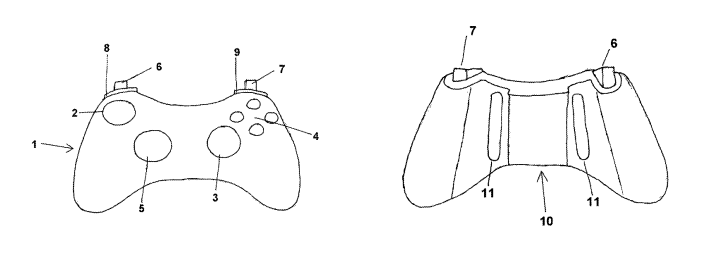
The Federal Circuit has reversed the IPR estoppel rulings in Ironburg Inventions Ltd. v. Valve Corp., No. 2024-2088 (Fed. Cir. June 18, 2026). This case is part of a long-running fight over Ironburg's rear-paddle game controller patent and the $4 million willful-infringement verdict Ironburg won against Valve's Steam Controller. The panel here held that Valve is not estopped from raising two invalidity grounds it left out of its 2016 IPR petition, and returned the case for further proceedings on invalidity. The disposition is a loss for the patentee, but what is most interesting for me is Judge Stark's concurrence, which provides more structure to the "skilled searcher conducting a diligent search" estoppel test.
Section 315(e)(2) creates estoppel prohibiting an IPR petitioner (or RPI) from later asserting in patent litigation "that the claim is invalid on any ground that the petitioner raised or reasonably could have raised during that inter partes review."
This case focuses on the scope of this reasonableness estoppel in a situation where - at the time of the IPR - the patent challenger did not have the key prior art in hand or perhaps had not identified the particular ground for challenging the patent.
Here, the Judge Stark opinion breaks the reasonableness process into two steps:
The two steps here follow from Ingenico Inc. v. IOENGINE, LLC, 136 F.4th 1354 (Fed. Cir. 2025), which held that an estoppel "ground" is not the same thing as the references underlying it. See Dennis Crouch, Reference Recycling and the Case for Sua Sponte Rehearing in Ingenico, Patently-O (May 19, 2025). This result narrows the estoppel. A patentee showing that a reference could be located (or even was actually located) does not by itself prove that the obviousness theory (i.e., ground) built on it was discoverable.
| # | Наименование новости | Тональность | Информативность | Дата публикации |
|---|---|---|---|---|
| 1 | USPTO’s PTAB Rulemaking Signals a Major Shift in IPR Practice | 0 | 6.02 | 03-08-2026 |
| 2 | En Banc Ninth Circuit to Reconsider Copyright’s Total Concept and Feel Test | 0 | 5 | 22-06-2026 |
| 3 | The Federal Circuit’s Expanding Grip on Dismissed Patent Claims | 0 | 5 | 16-06-2026 |
| 4 | Hooked on Differences: Design Patent Doctrine and Schedule A Litigation at the Federal Circuit | 0 | 3 | 14-06-2026 |
| 5 | Same Direction, Different Engines: FY2026 Utility and Design Grant Projections | 0 | 5 | 19-06-2026 |
| 6 | The First Offer Accepted: First-Action Allowances and the Track 1 Premium | 0 | 7 | 17-06-2026 |
| 7 | Three Is Company: New Data on § 103 Reference Counts | 0 | 5 | 23-06-2026 |
| 8 | Provisional Typo Spoils Priority Date | 0 | 5 | 24-06-2026 |
| 9 | Pre-Negotiated: How Continuations and Art Units Shape the First-Action Allowance | 0 | 5 | 19-06-2026 |
| 10 | Роспатент внес в Думу законопроект о реестре 3D-изображений интеллектуальной собственности | 0 | 0 | 13-08-2019 |